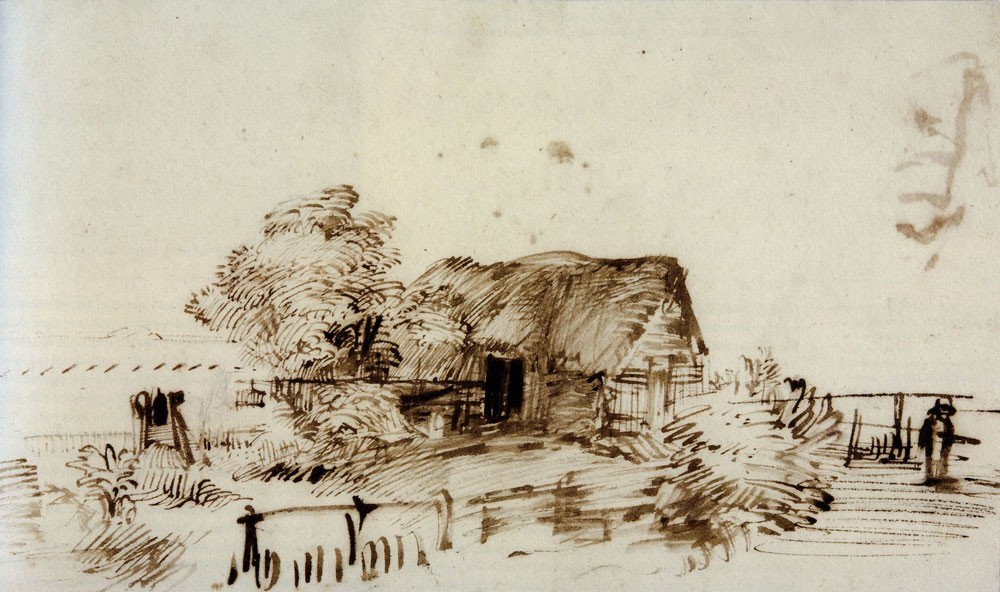
Thatched Cottage
- Catalog
- WD-D15
- Artist
- Willem Drost
- Year
- c. 1652
- Medium
- Pen and brown ink
- Dimensions
- Unknown
- Location
- Present location unknown
Description
A landscape drawing of a rural thatched cottage by Willem Drost. Along with The Bend in the Amstel River (WD-D14), this is one of only two known landscape drawings by the artist.
Analysis
Attributed to Drost by Sumowski and listed by PubHist as a fully attributed work, this drawing adds to the evidence that Drost produced landscape studies early in his career. The subject — a humble thatched cottage — was a popular motif in Dutch landscape art of the period, associated with artists like Rembrandt and his pupils. The early date (c. 1652) places it at the very beginning of Drost's known career.
Historical Context
The Dutch Republic had just secured its independence from Spain through the Treaty of Münster (1648), ending the Eighty Years’ War. The Peace of Westphalia simultaneously concluded the devastating Thirty Years’ War, reshaping the European political order. Amsterdam was experiencing a golden age of prosperity, its merchant fleet dominating global trade. Rembrandt was at the peak of his fame, running the largest and most prestigious painting workshop in the city, where Drost and other pupils studied the master’s technique of chiaroscuro and psychological portraiture.