Works Catalog
Explore all 57 confirmed works by Willem Drost
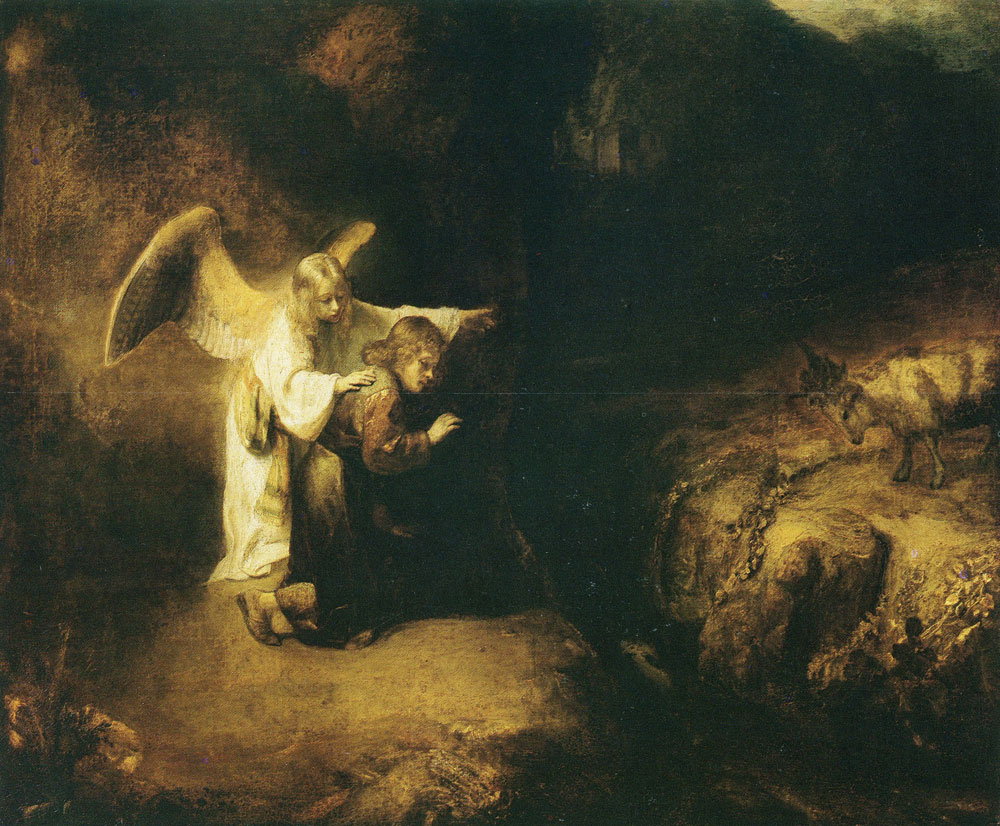
The Vision of Daniel
1650, Gemäldegalerie, Berlin
An early masterwork depicting the prophet Daniel receiving a divine vision. The dramatic chiaroscuro and emotional intensity reveal Drost's deep understanding of Rembrandt's techniques while hinting at his own developing style.
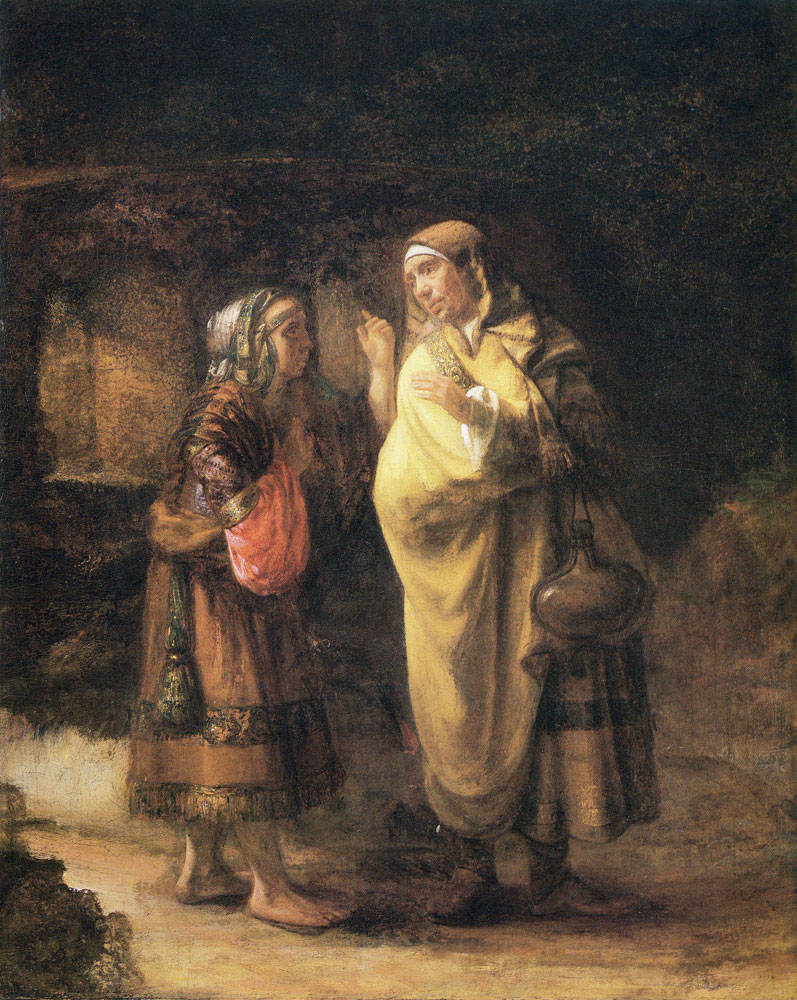
Ruth and Naomi on the road to Bethlehem
c. 1651, Ashmolean Museum, Oxford
A tender biblical scene showing Ruth and Naomi embracing on the road to Bethlehem. The intimate composition focuses on the emotional bond between the two women.
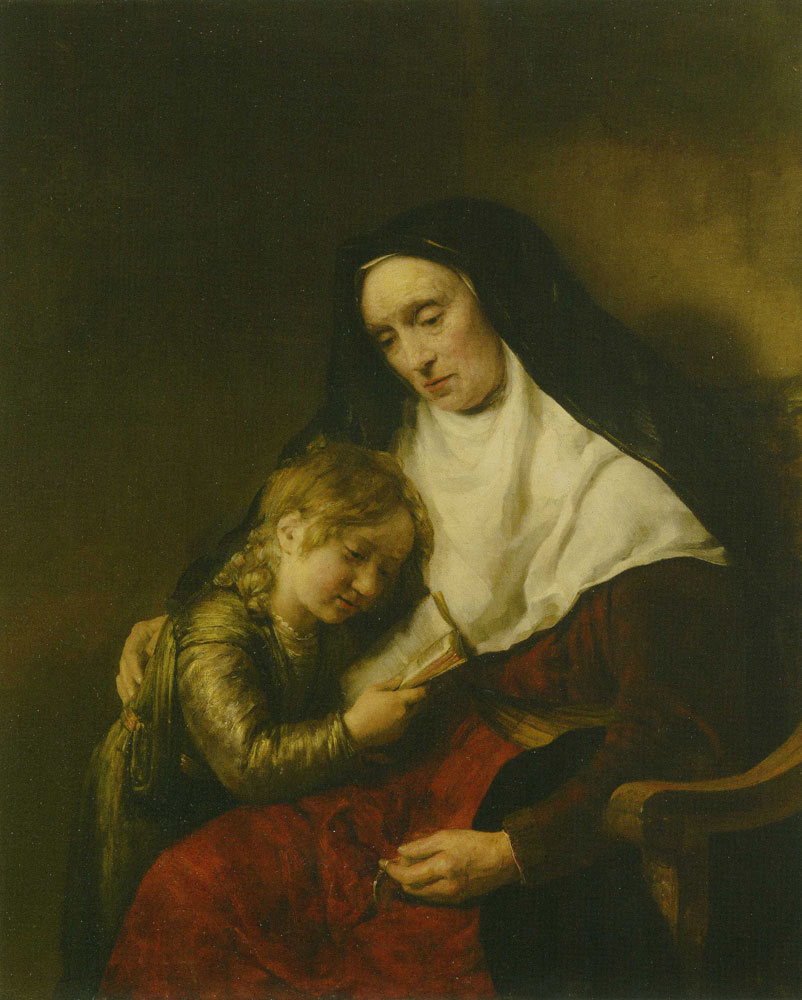
Timothy and Lois
c. 1650s, Hermitage Museum, St. Petersburg
Depicting the biblical scene of Timothy with his grandmother Lois (also known as "The Prophetess Anna Instructing a Child"). The intergenerational relationship is rendered with sensitivity and warmth. For two centuries this was considered one of the Hermitage's best Rembrandts.
The Philosopher
1653, National Gallery of Art, Washington, DC
A contemplative figure studies ancient texts by candlelight. The painting exemplifies Drost's interest in solitary scholars and the pursuit of knowledge, a theme common in Dutch Golden Age painting.
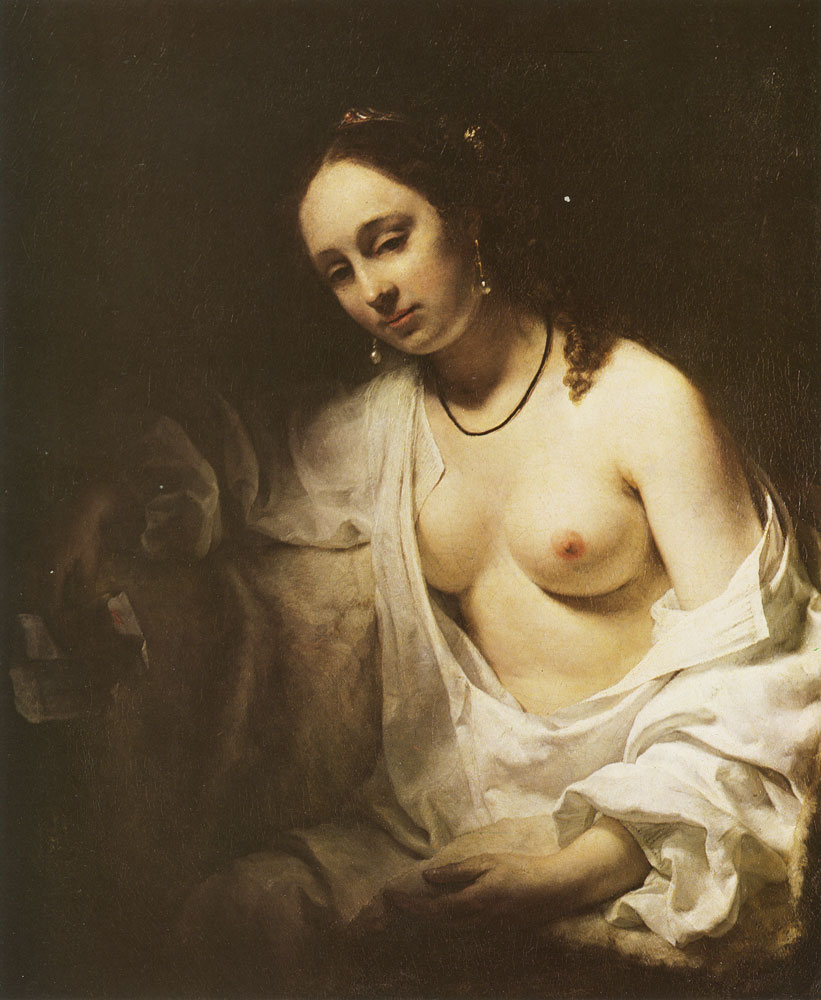
Bathsheba with King David's Letter
1654, Louvre, Paris
Drost's most celebrated work, depicting Bathsheba holding King David's letter. The painting is remarkable for its psychological complexity and masterful handling of light and texture.
The Unmerciful Servant
1655, Wallace Collection, London
A dramatic biblical parable rendered with emotional intensity. The painting captures the moment of confrontation between the king and the unforgiving servant.
Abraham Casting Out Hagar & Ishmael
c. 1659, Guilford College, Greensboro, NC
A large-scale biblical scene depicting Abraham sending Hagar and Ishmael into the wilderness. The emotional weight of the narrative is conveyed through gesture and composition.
St. Matthew and the Angel
1659, North Carolina Museum of Art, Raleigh
The evangelist Matthew receives divine inspiration from an angel. This late work demonstrates Drost's mature style and his continued exploration of religious themes.
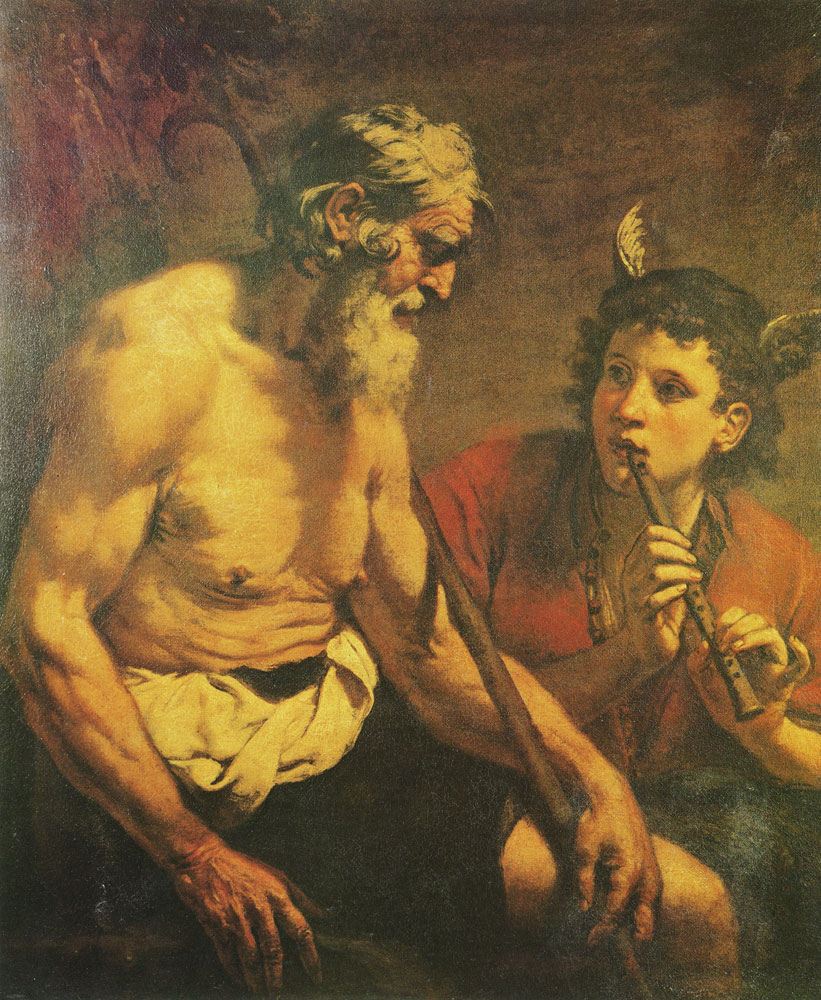
Mercury and Argus
c. 1659, Gemäldegalerie Alte Meister, Dresden
A classical mythological scene depicting Mercury lulling Argus to sleep with his flute. This is one of Drost's few known mythological subjects.
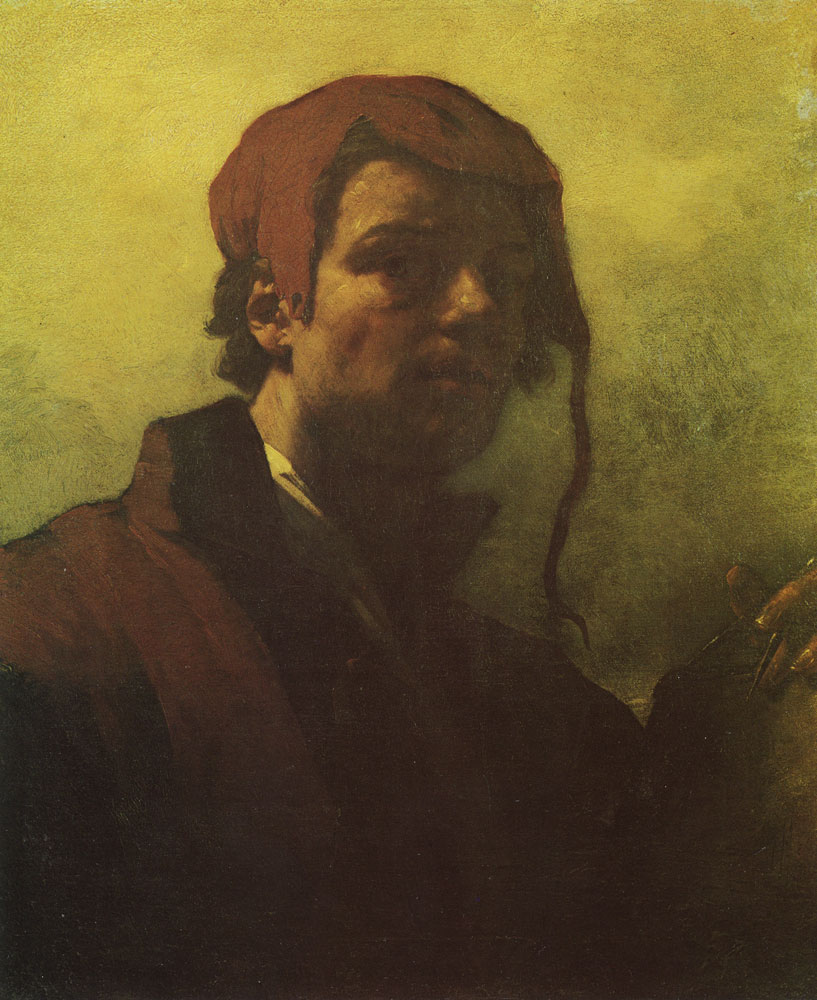
Self Portrait of the Artist
1652, Private Collection
An early self-portrait showing the young artist at approximately 19 years of age. The direct gaze and confident handling reveal Drost's early artistic ambition.
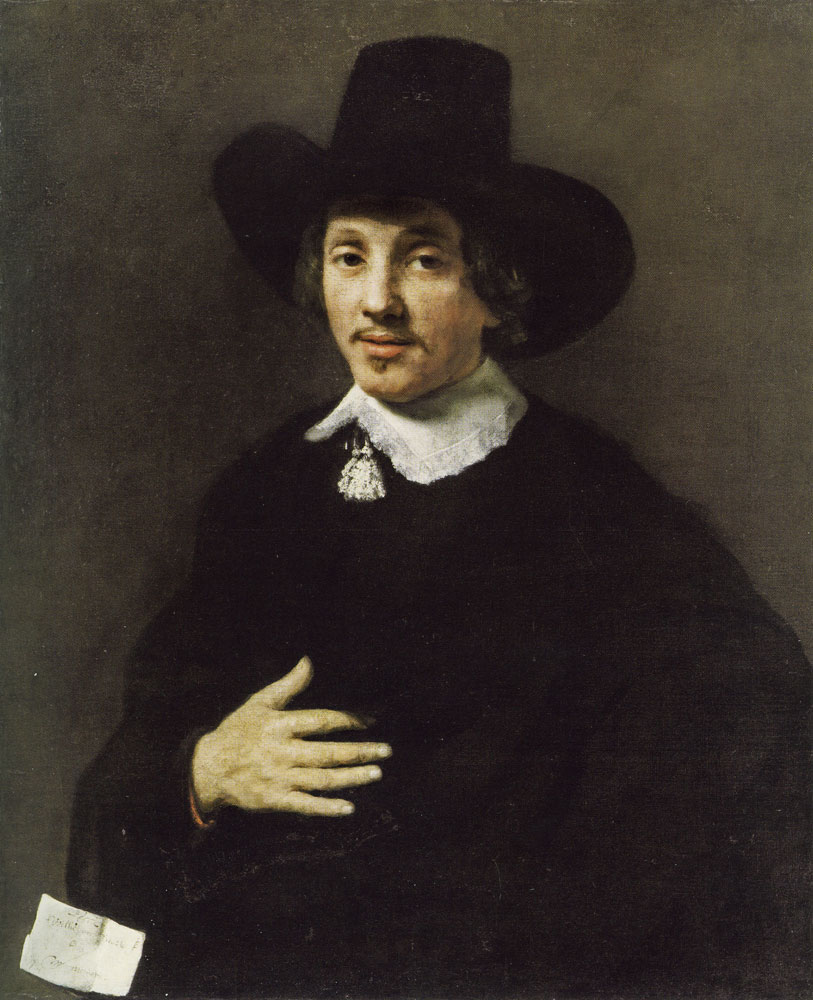
Portrait of a Man (Self-Portrait?)
1653 or 1655, Metropolitan Museum of Art, New York
A commanding portrait of an unknown sitter, possibly a self-portrait. The Met lists the date as either 1653 or 1655, reflecting scholarly uncertainty. The painting demonstrates Drost's skill in capturing both likeness and psychological depth.
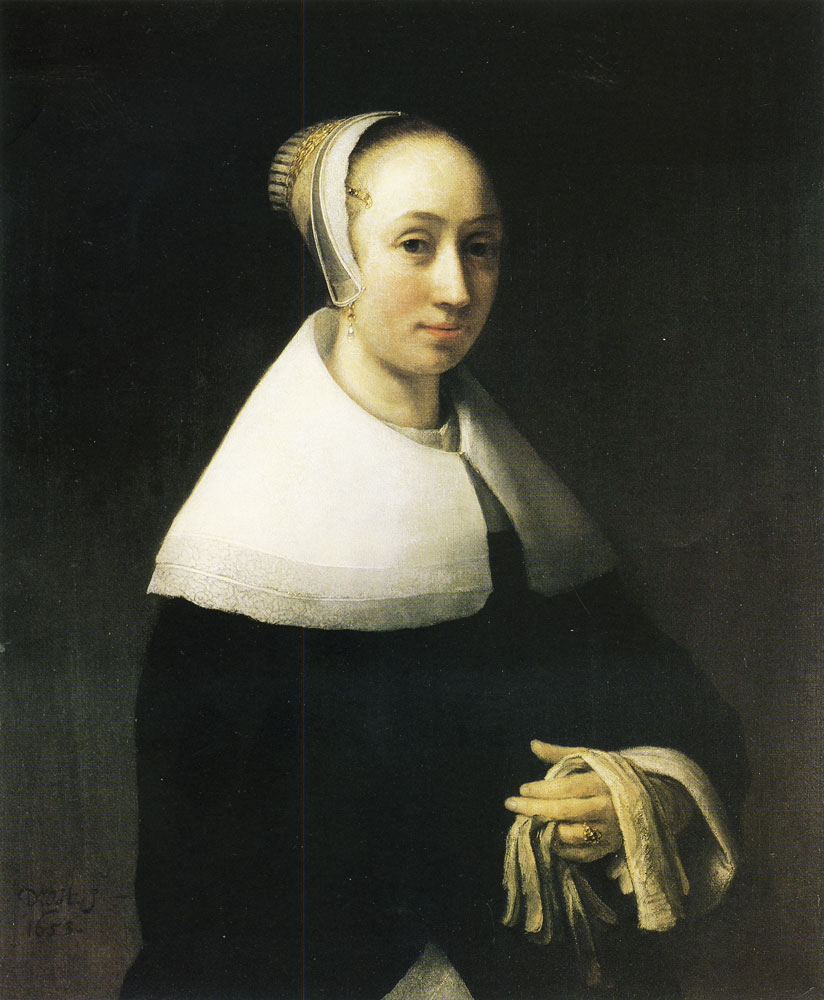
Portrait of a Woman
1653, Museum Bredius, The Hague
A dignified portrait of a woman of the Dutch burgher class. The sitter's serene expression and elaborate costume reflect the prosperity of the Dutch Golden Age.
Youth with an Earring
c. 1655–59, Hermitage Museum, St. Petersburg
A romanticized youth in 16th-century costume, wearing an earring. Painted during Drost's Italian period, this tronie was long attributed to the Sicilian painter Pietro Novelli before Sumowski identified it as Drost in 1990.
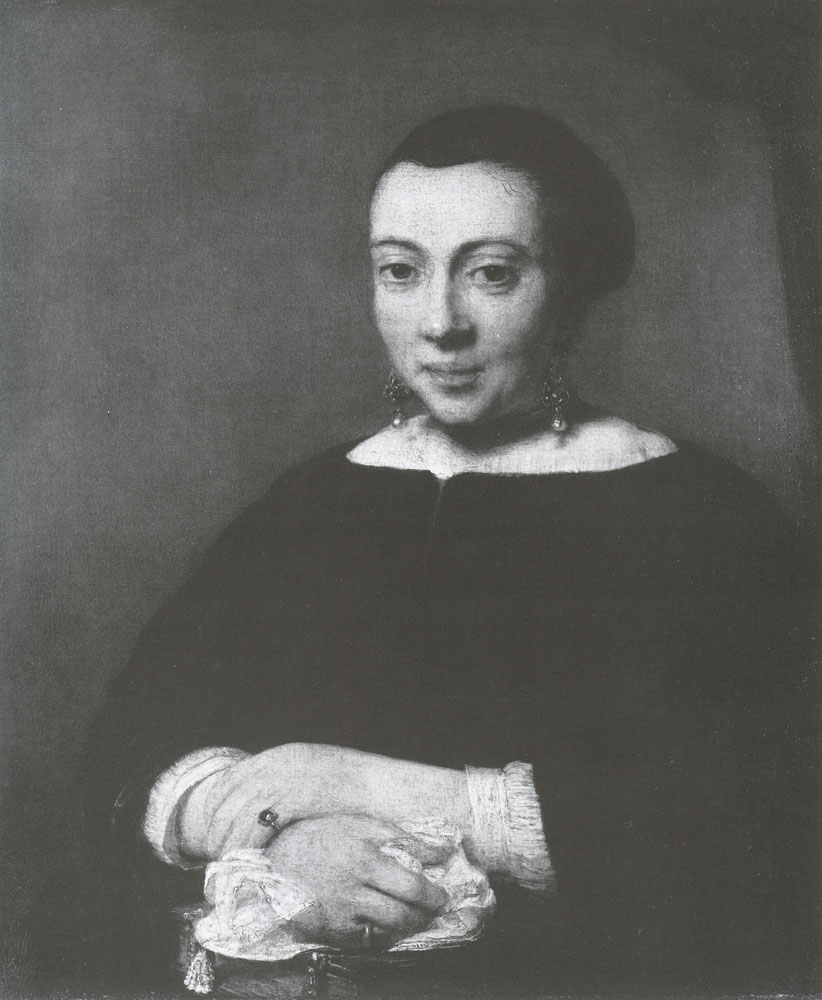
Portrait of a Young Woman with her Hands Folded on a Book
1654, National Gallery, London
A masterful portrait long attributed to Rembrandt, only recently recognized as Drost's work. The sitter's introspective expression and folded hands convey quiet dignity.
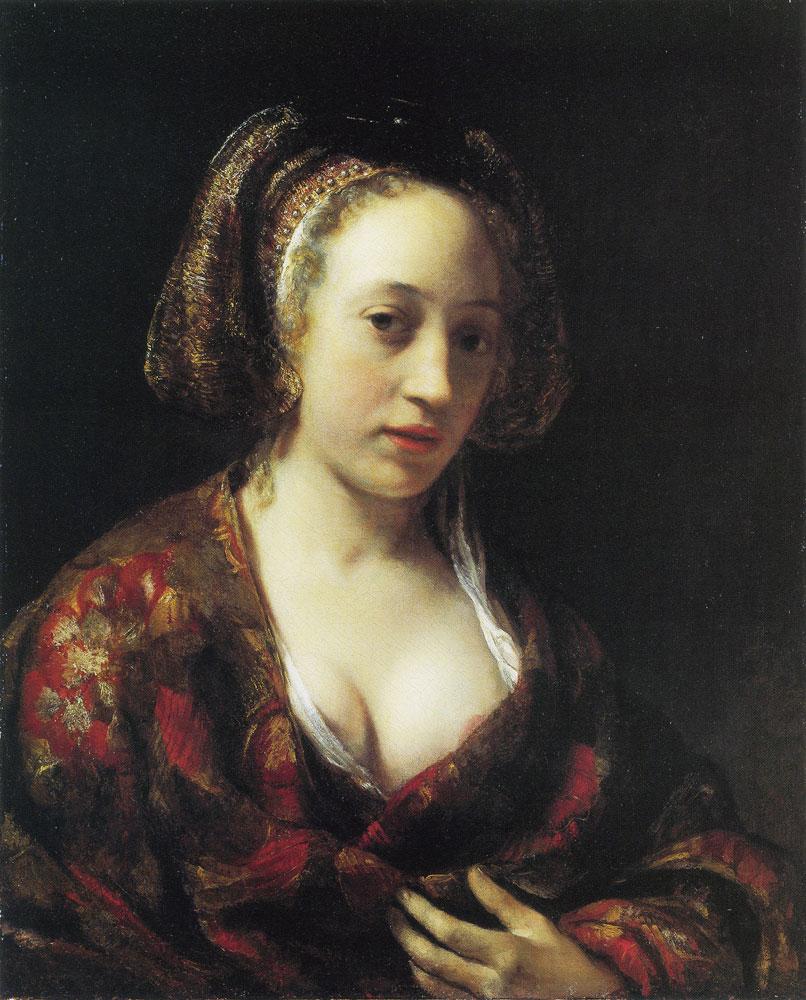
Young Woman in a Brocade Gown
c. 1654, Wallace Collection, London
An elegant portrait of a young woman wearing an elaborate brocade gown. The painting showcases Drost's ability to render luxurious textiles and capture youthful beauty.
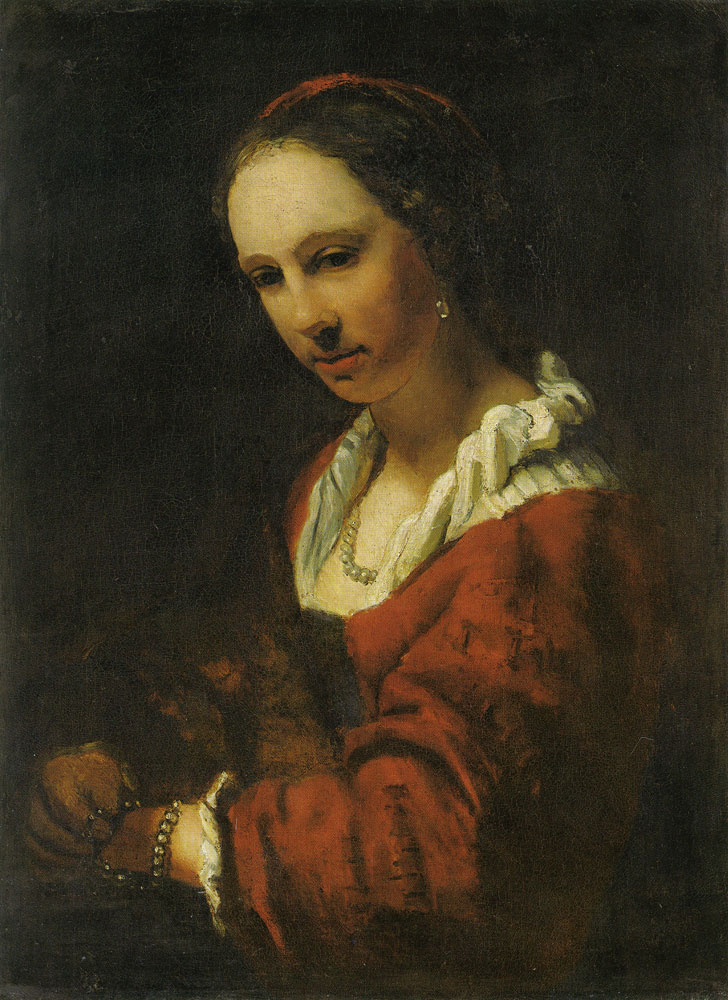
Young Woman in a Pearl Necklace
c. 1654, Gemäldegalerie Alte Meister, Dresden
A half-length portrait of a young woman adorned with a pearl necklace. The painting exemplifies Drost's delicate handling of light on fabric and skin.
Man with a Plumed Red Beret
1654, The Leiden Collection, New York
A powerful tronie — a study of an exaggerated character type — depicting a bearded man in a brilliant red beret with an ostrich plume. The sitter's forceful pose and intense gaze command attention.
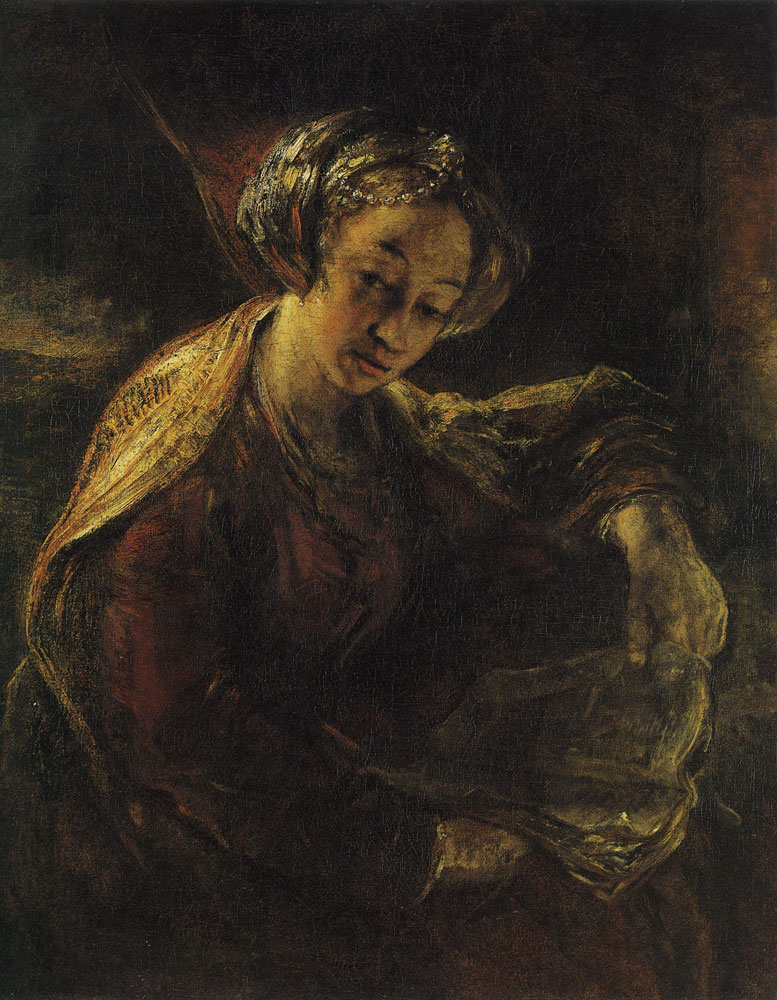
The Sibyl
c. 1654, Metropolitan Museum of Art, New York
A half-length depiction of a Sibyl — a prophetic figure from classical antiquity — holding a book. The subject reflects Drost's engagement with classical themes alongside his biblical works.
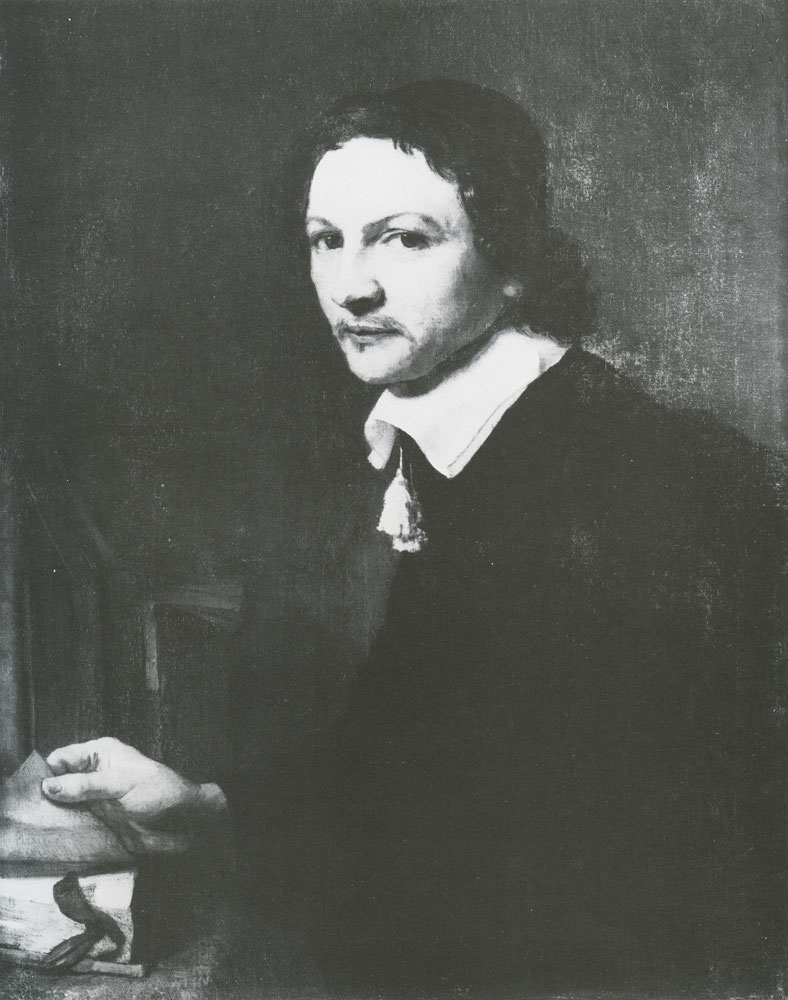
Portrait of a Man Skimming a Book
c. 1655, Louvre, Paris
A scholar or gentleman caught in the act of reading, his finger marking his place. The painting captures a moment of intellectual engagement.
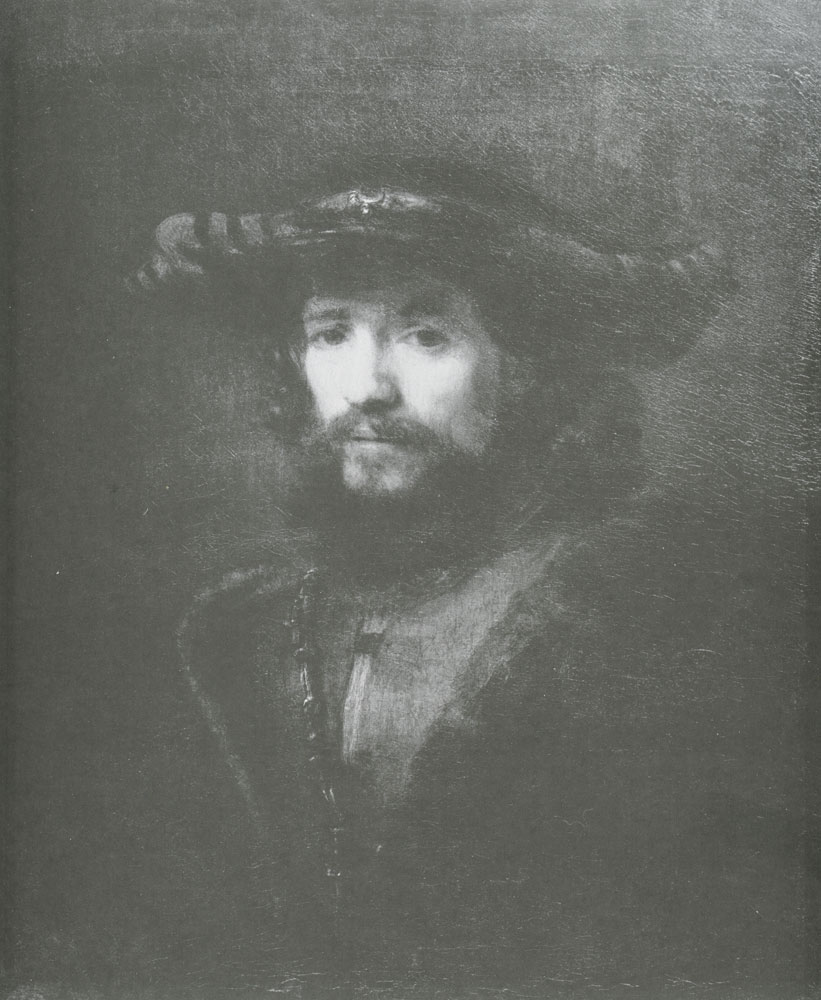
Bust of man wearing a large-brimmed hat
c. 1655, National Gallery of Art, Dublin
A bust-length portrait of an unknown man wearing a characteristically large-brimmed hat typical of Dutch Golden Age portraiture.
Geographer
1655, Grohmann Museum, Milwaukee
A scholar surrounded by maps, globes, and navigational instruments. The painting belongs to the tradition of learned men absorbed in their studies.
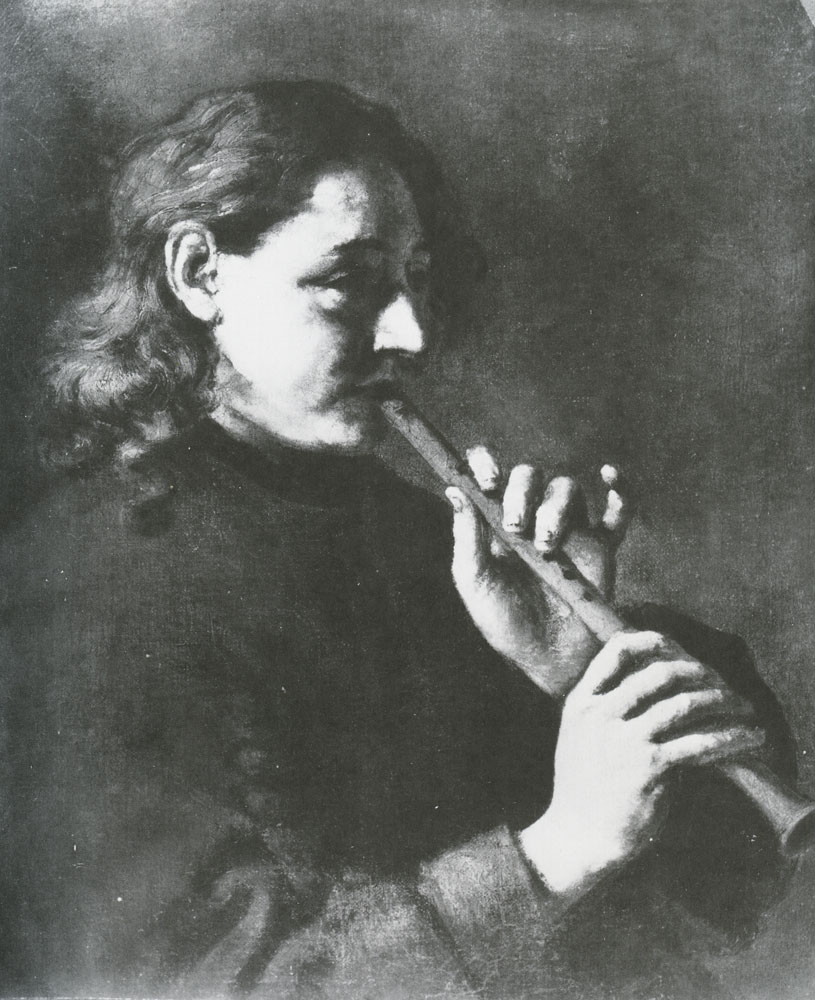
Flute Player
1655, Private Collection, Germany
A young musician playing the flute, captured in a moment of musical absorption. The painting exemplifies Drost's interest in genre subjects.
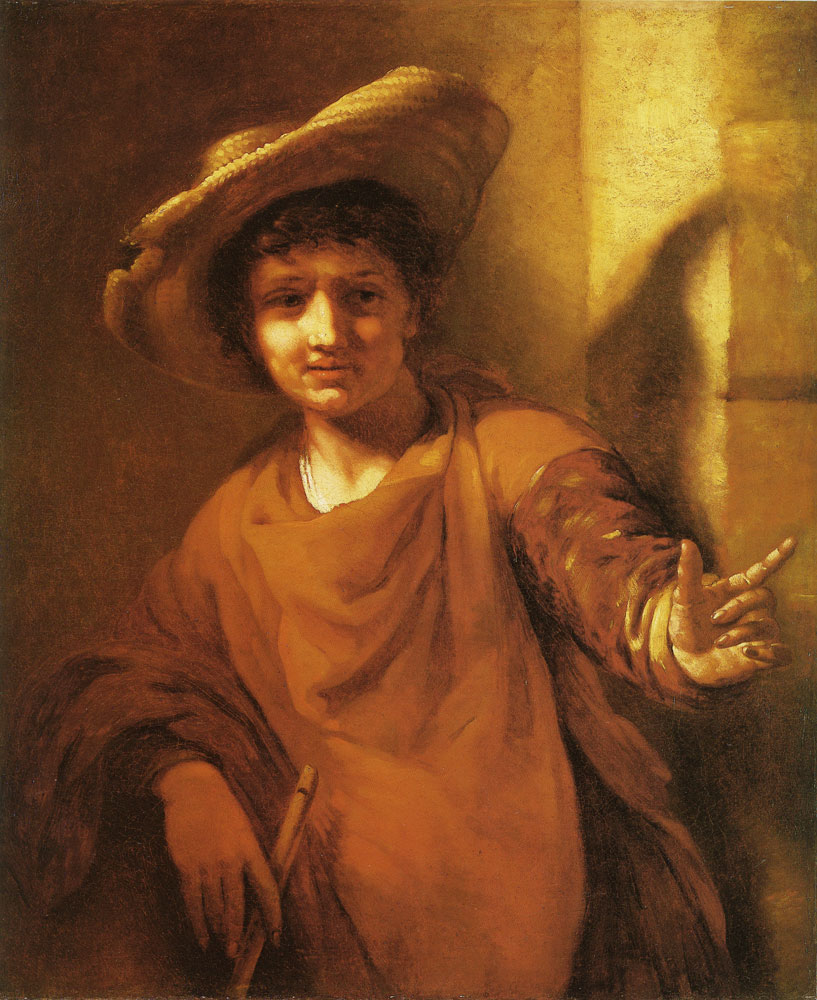
Young Man with a Flute
c. 1656, Private Collection, Scandinavia
A half-length portrait of a young man holding a flute, possibly a musician or music student. The informal composition suggests a moment of repose.
Old Woman Teaching a Child
c. 1657, Hermitage Museum, St. Petersburg
An intimate genre scene showing an elderly woman teaching a young child, rendered with warmth and psychological insight.
Boy with a Recorder
c. 1658, Galleria Palatina, Florence
A young boy holding a recorder, possibly a study of a musician or a genre piece depicting childhood. Painted during Drost's Italian period.
The Oyster Seller
c. 1659, Louvre, Paris
A genre scene depicting a young woman selling oysters, a subject with both culinary and erotic connotations in Dutch Golden Age painting.
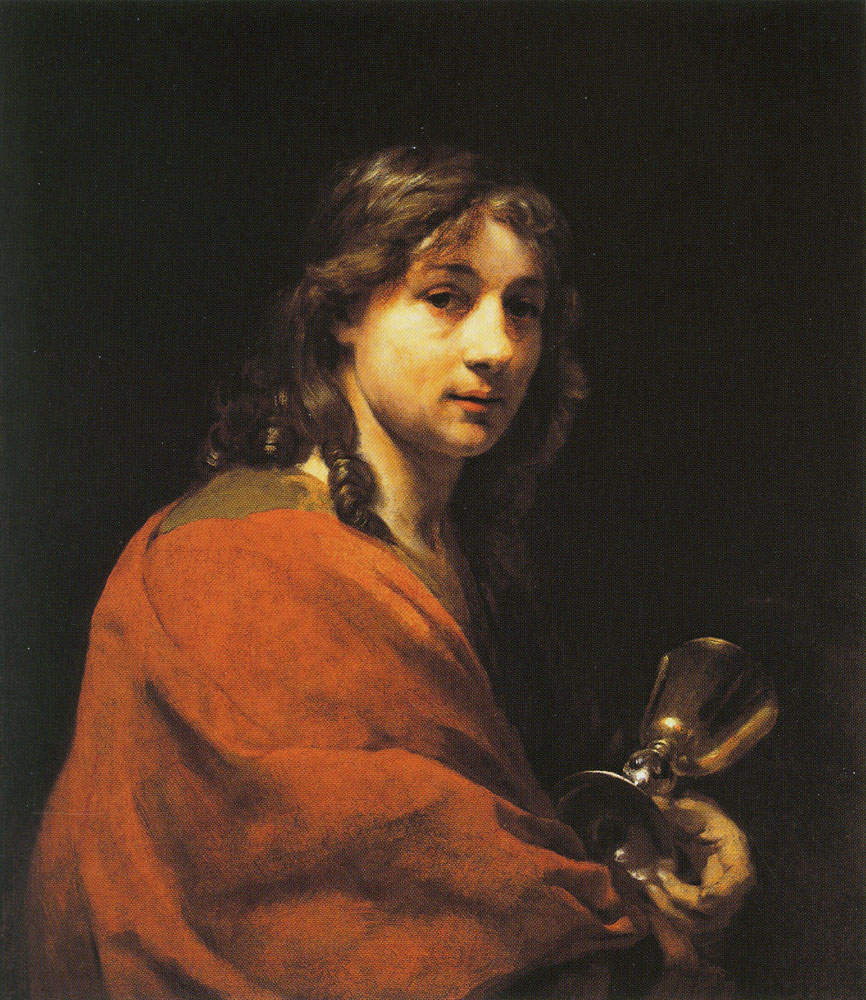
Self Portrait as Saint John the Evangelist
c. 1655, Agnes Etherington Art Centre, Kingston, Ontario
A remarkable self-portrait in which Drost depicts himself as Saint John the Evangelist, merging portraiture with religious identity.
Self Portrait of the Artist as John the Evangelist
c. 1650, Bader Collection, Milwaukee
An earlier self-portrait with religious connotations, showing the young artist in the guise of John the Evangelist.
Flora
c. 1655–59, Private Collection
A half-length depiction of Flora, the Roman goddess of flowers and spring, painted during Drost's Italian period. The youthful goddess wears a floral wreath and holds flowers against her chest, her expression contemplative.
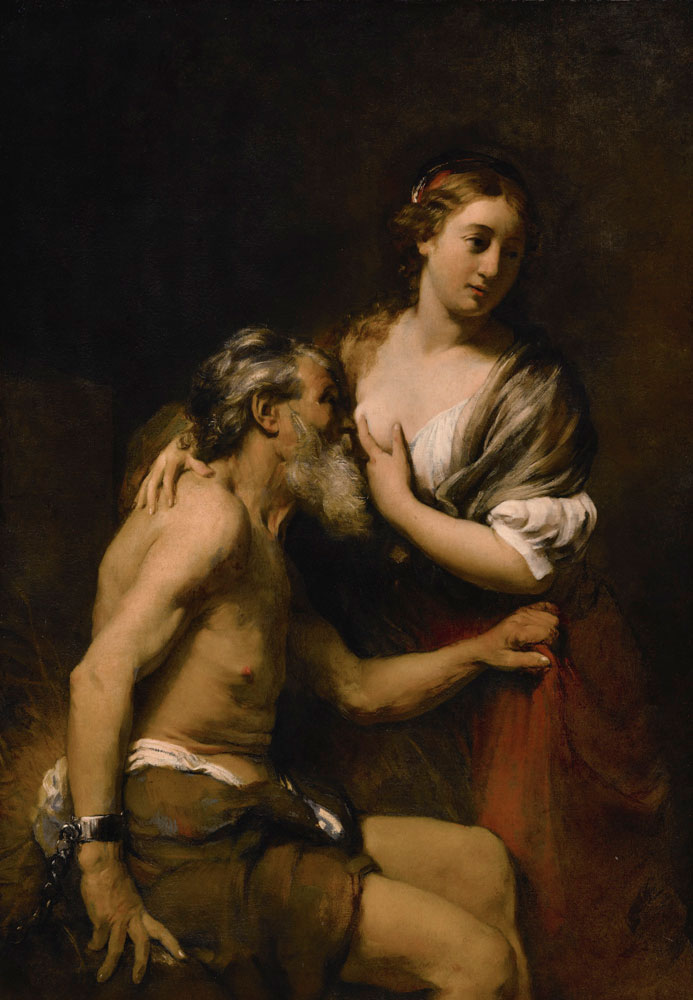
Roman Charity (Cimon and Pero)
1655–57, Private Collection
A dramatic rendering of the classical story of Cimon and Pero — also known as Roman Charity — in which the daughter Pero secretly breastfeeds her imprisoned father Cimon to save him from starvation. The theme of filial piety was popular in Baroque painting.
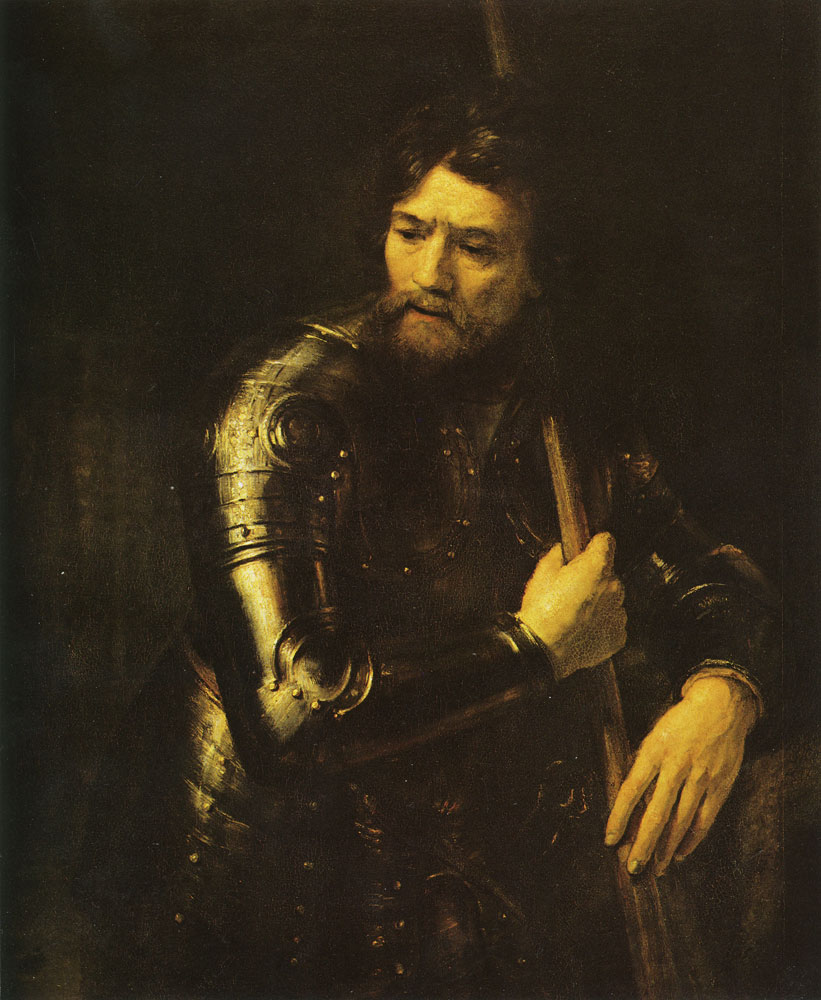
Standing Man in Armour
1655, Gemäldegalerie Alte Meister, Kassel
A full-length portrait of a man in gleaming armour, standing in a heroic pose. The work belongs to the tradition of tronies depicting soldiers and military figures, a popular genre in the Rembrandt circle.
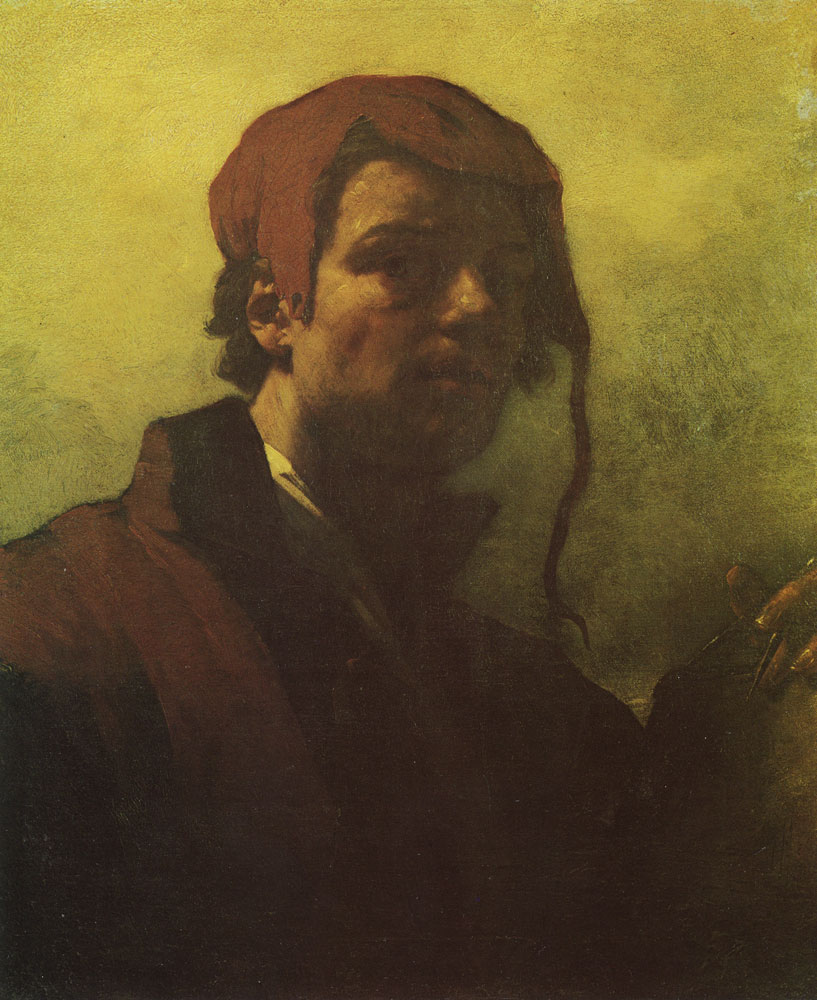
Self-Portrait before the Easel
c. 1655, Ashmolean Museum, Oxford
A self-portrait showing the young artist standing before his easel, palette in hand. The painting offers a rare glimpse of Drost's self-conception as an artist.
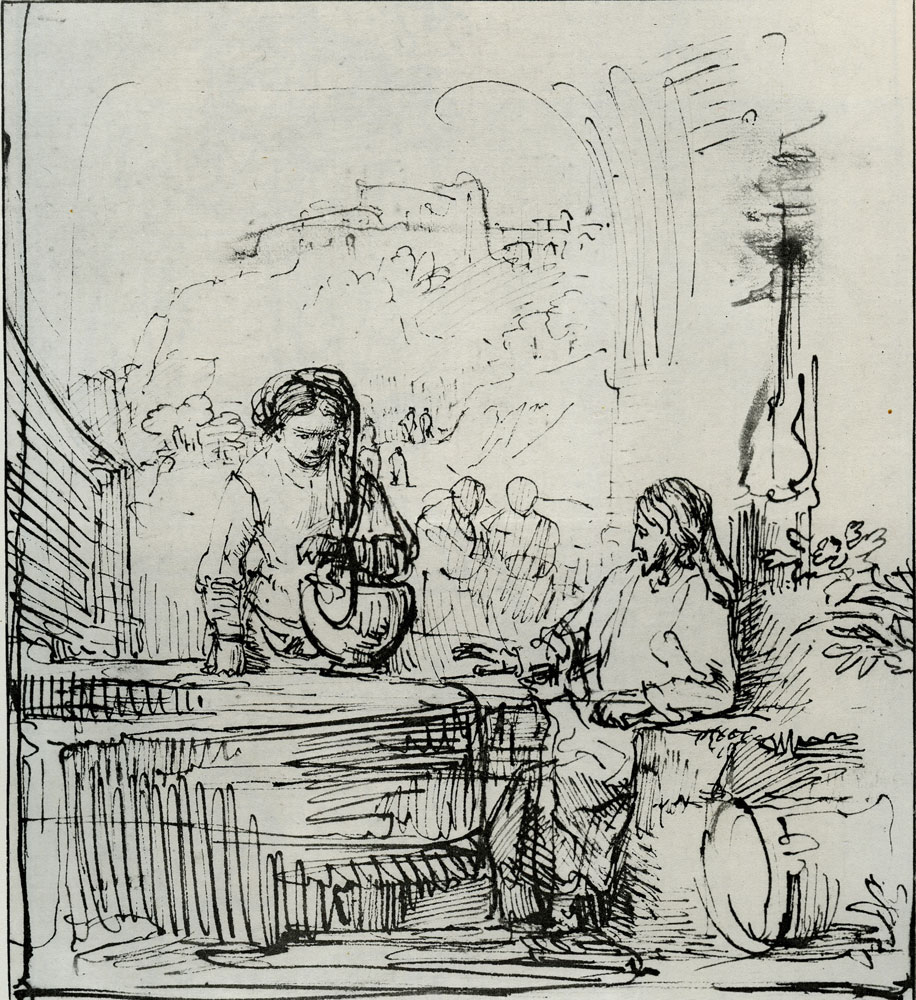
Christ and the Woman of Samaria
c. 1648–49, Barber Institute of Fine Arts, Birmingham
A pen and bistre drawing attributed to Drost, depicting the biblical encounter between Christ and the Samaritan Woman at Jacob's well (John 4:4–42). Unusually small in scale, it may be a preparatory study.
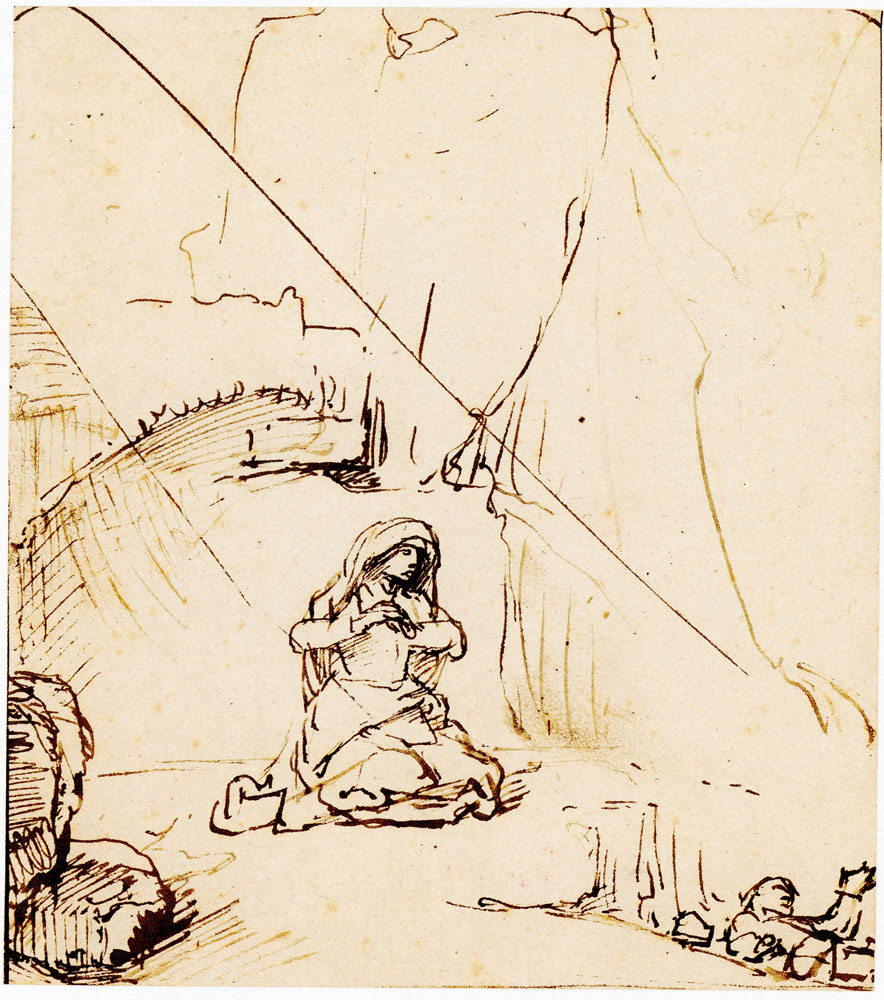
The Dismissal of Hagar and Ishmael
c. 1652–55, Private Collection (formerly De Clercq Collection)
A small pen and brown ink drawing depicting the biblical scene from Genesis 21:14, where Abraham sends Hagar and Ishmael into the wilderness. Attributed to Drost by leading scholars.
Self-Portrait of the Artist (etching)
1652, Rijksmuseum, Amsterdam
A small self-portrait etching by Drost, signed "w drost 1652", showing the young artist at about age 19 in the act of drawing. The etching medium demonstrates Drost's training in printmaking within Rembrandt's workshop.
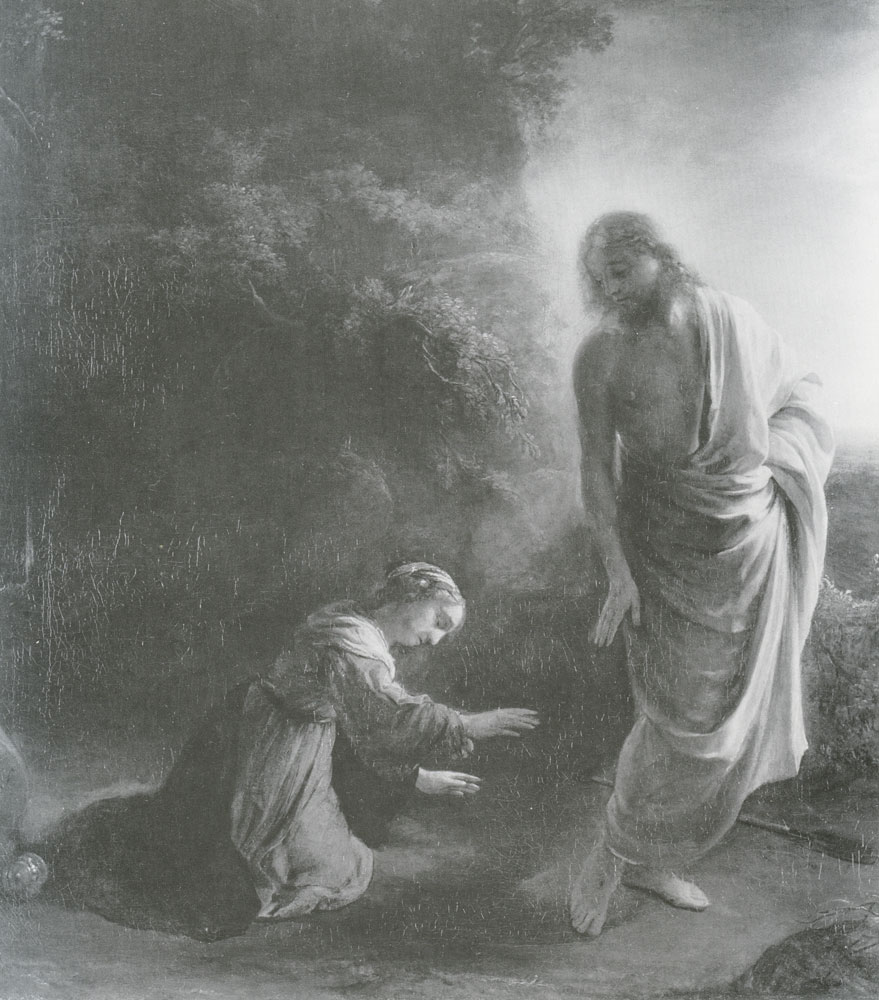
Noli me Tangere
c. 1650–52, Statens Museum for Kunst, Copenhagen
A pen drawing depicting the moment when the risen Christ appears to Mary Magdalene and tells her "Noli me tangere" (Touch me not), from John 20:17. The composition relates directly to a painting by Drost.
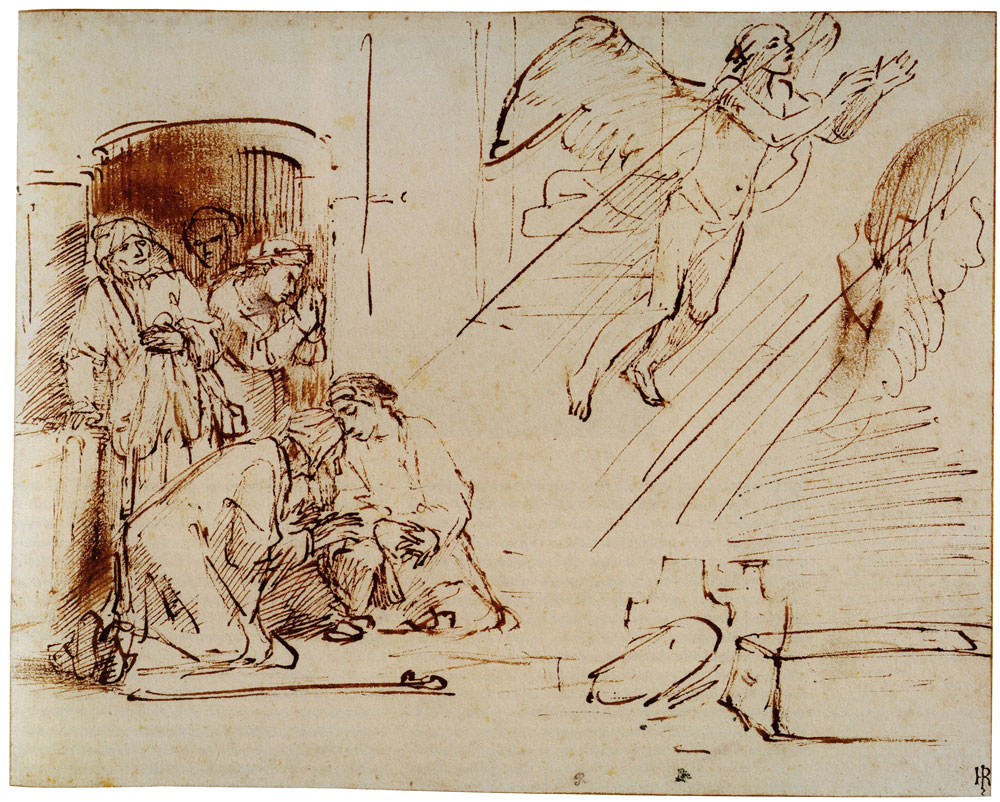
The Angel Departing from the Family of Tobit
c. 1655–60, Pierpont Morgan Library & Museum, New York
A drawing depicting the apocryphal story from Tobit 12:20-21, where the angel Raphael departs from the family of Tobit. The scene shows the family's awe and wonder at the angel's ascension.
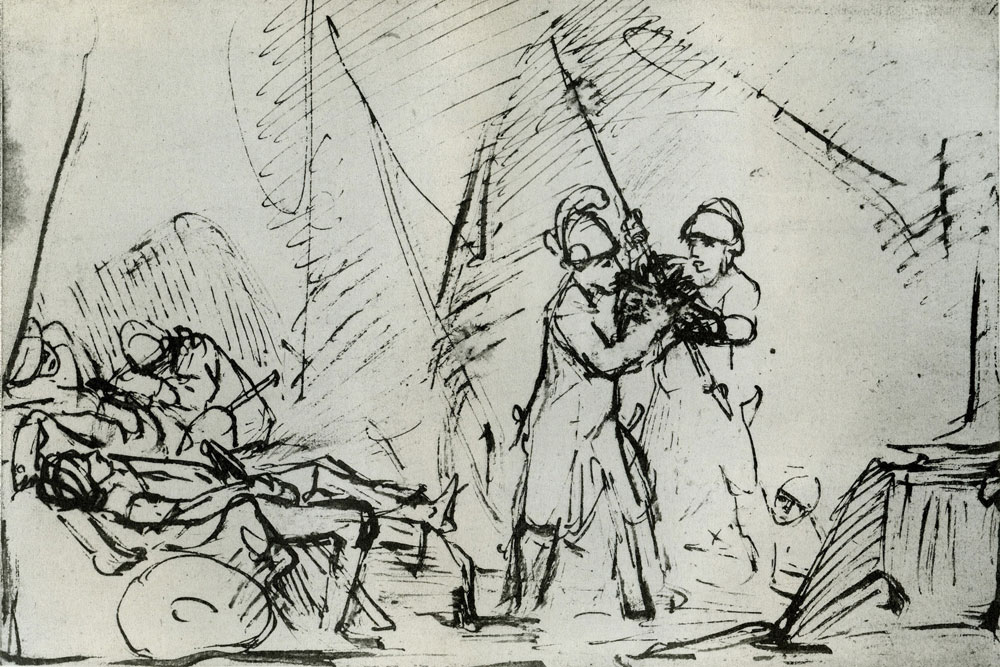
David Preventing Abishai from Killing Saul
c. 1650–55, Rijksmuseum, Amsterdam
A biblical scene from 1 Samuel 26:7-12, where David prevents his companion Abishai from killing King Saul as he sleeps. Abishai has pulled the spear from the ground, intent on killing Saul, who sprawls at left on his back asleep with his shield beside him.
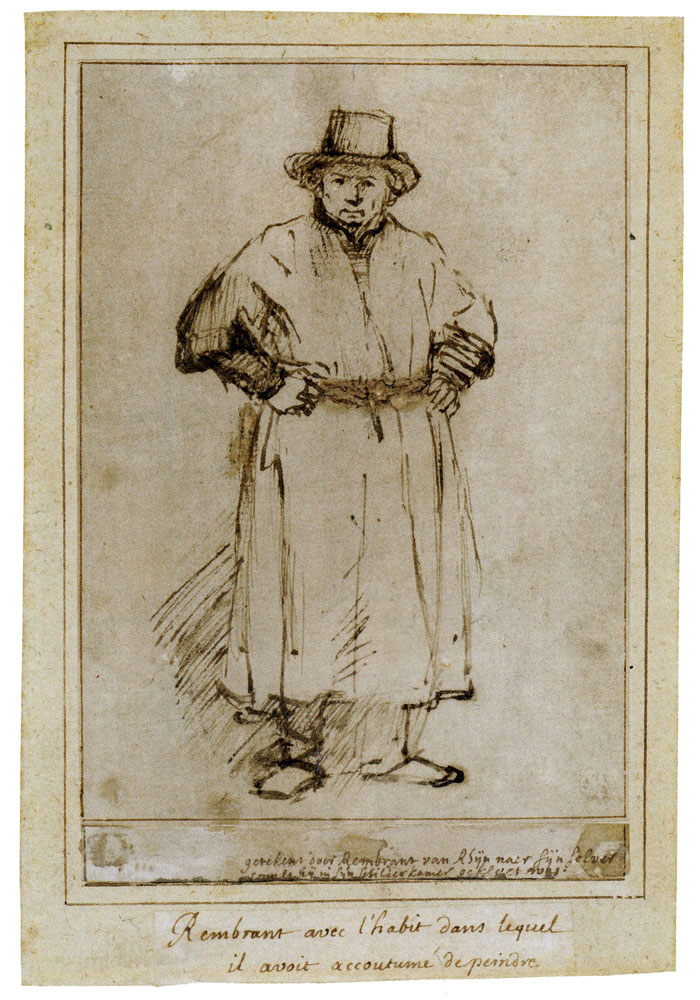
Portrait of Rembrandt
c. 1655-56, Present location unknown
A portrait drawing of Rembrandt van Rijn by his pupil Willem Drost. The drawing depicts the master in middle age and is one of the few known portraits of Rembrandt executed by a member of his own workshop.
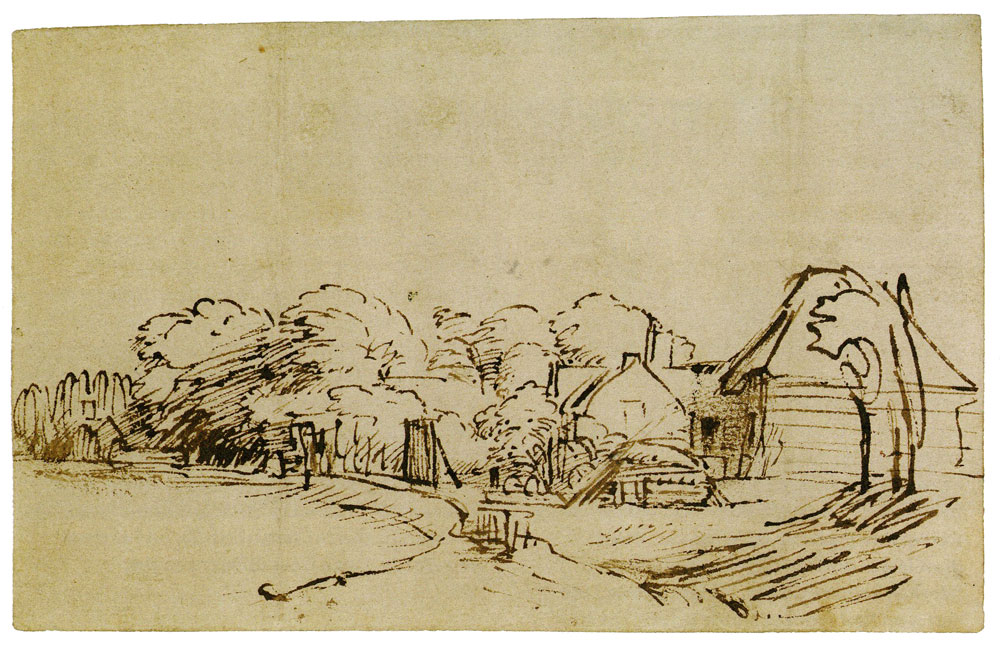
The Bend in the Amstel River
c. 1653, Present location unknown
A rare landscape drawing by Willem Drost depicting a bend in the Amstel River near Amsterdam. Landscape subjects are extremely unusual in Drost's known oeuvre, making this a significant addition to understanding his artistic range.
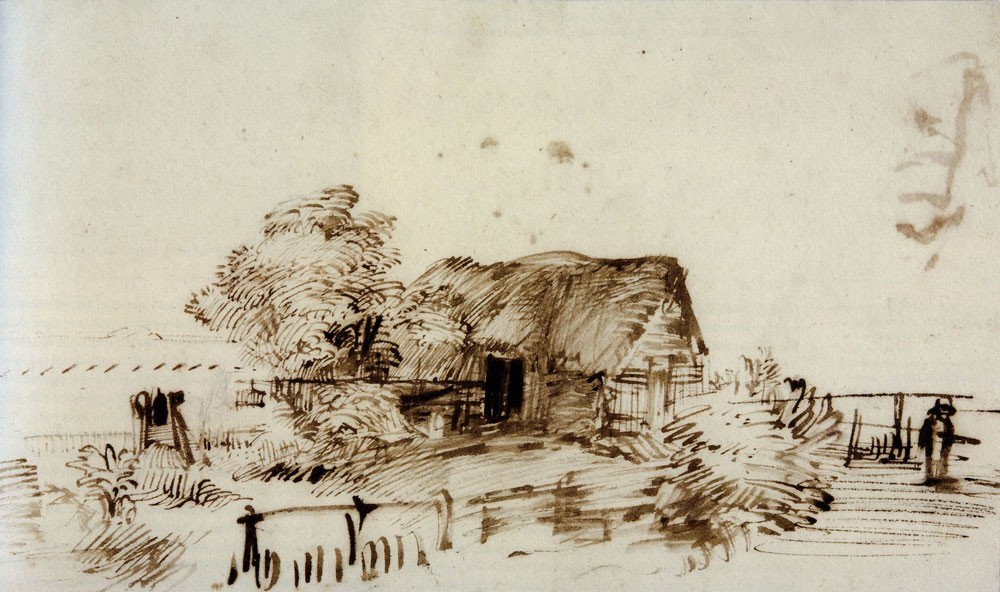
Thatched Cottage
c. 1652, Present location unknown
A landscape drawing of a rural thatched cottage by Willem Drost. Along with The Bend in the Amstel River (WD-D14), this is one of only two known landscape drawings by the artist.
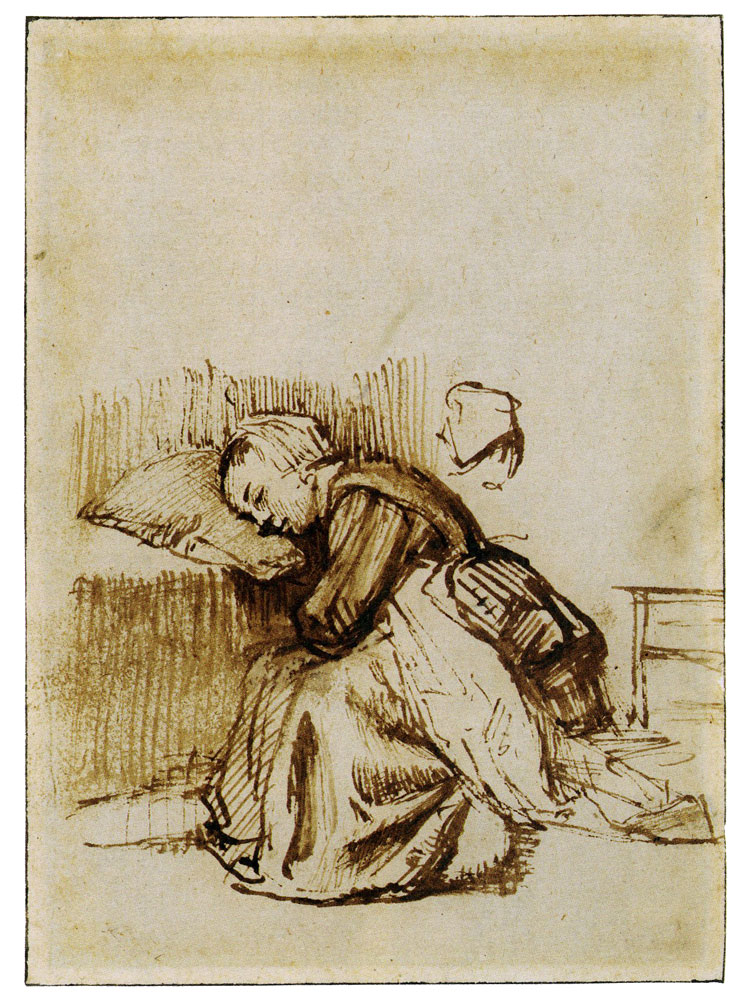
Girl Asleep
c. 1656, Present location unknown
A genre drawing of a young woman asleep, demonstrating Drost's interest in capturing quiet, everyday moments alongside his more formal biblical and portrait subjects.
The Polish Rider
c. 1655, Frick Collection, New York
The famous and enigmatic Polish Rider, long attributed to Rembrandt. Some scholars suggest Drost may have contributed to this iconic work.
Portrait of a woman at her window
c. 1654, Private Collection
A woman framed by a window, a common motif in Dutch Golden Age painting. Stylistic similarities to confirmed Drost works suggest his hand.
Young Man, Half-Length Seated, in a Red Jacket and Broad-Brimmed Cap
c. 1655, Private Collection
A half-length portrait of a young man in a striking red jacket and broad-brimmed cap. The brushwork and handling suggest Drost's authorship.
Saint-John the Evangelist in a Landscape
c. 1656, Private Collection
A depiction of Saint John the Evangelist in a landscape setting. The composition shows similarities to Drost's confirmed self-portraits as Saint John.
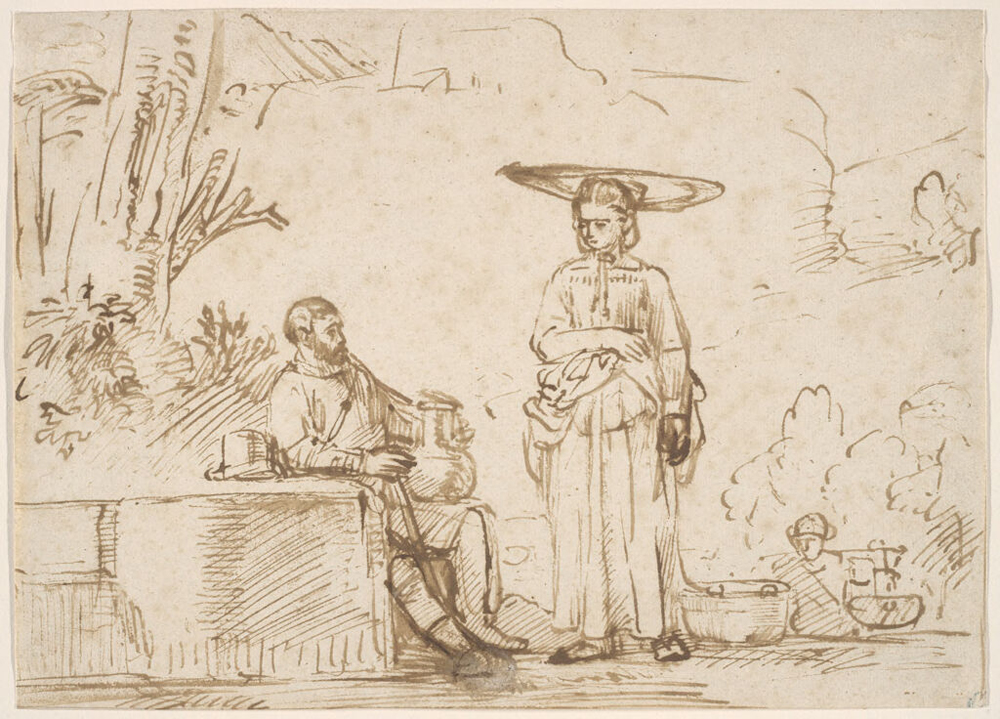
Eliezer and Rebecca at the Well
c. 1650–55, Harvard Art Museums, Cambridge, MA
A pen and brown ink drawing attributed to Drost, depicting the biblical scene from Genesis 24 where Abraham's servant Eliezer meets Rebecca at the well. Eliezer rests the pitcher on his thigh and exchanges glances with Rebecca, who wears a bern — a flat broad-brimmed hat worn by Roma women.
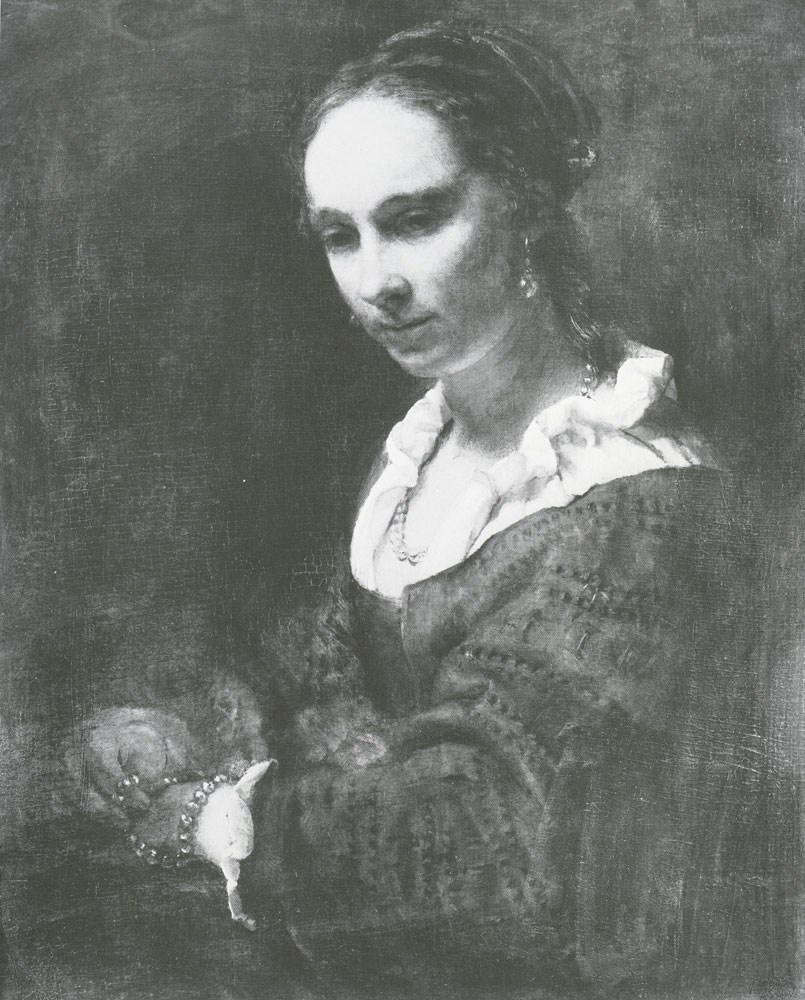
Portrait of a Woman
c. 1654, Szépmûvészeti Múzeum, Budapest
A half-length portrait of an unknown woman, likely of the Dutch burgher class. The painting is housed in the Szépmûvészeti Múzeum (Museum of Fine Arts) in Budapest.
A Young Woman, Bust Length, Wearing Traditional Costume
c. 1654, Private Collection
A bust-length portrait of a young woman in traditional Dutch costume. Limited documentation makes attribution uncertain.
A soldier, buckling his belt, a helmet on a table nearby
c. 1655, Private Collection
A soldier in the midst of dressing, captured in an unguarded moment. The subject and style are suggestive of Drost but stylistically ambiguous.
Portrait of a Geographer with compass, angle and globe
c. 1655, Private Collection
A scholar-geographer with his instruments. Possibly Drost or a contemporary working in a similar style.
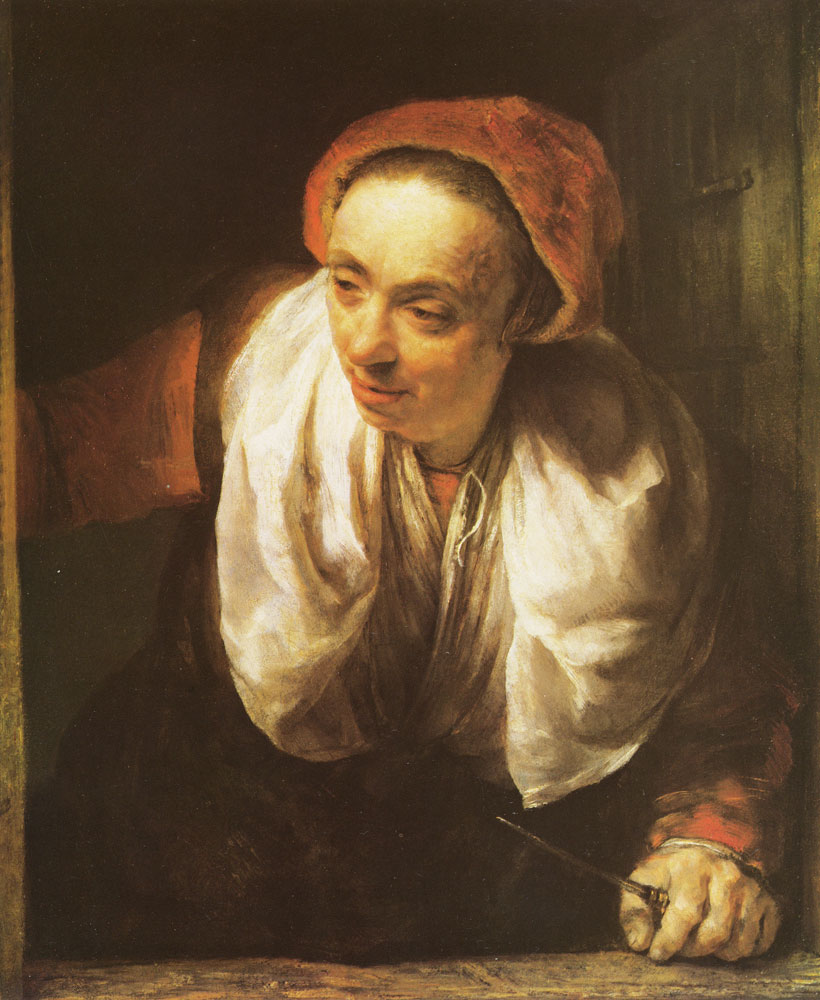
Cook at a Window
c. 1655, Unknown
A genre scene depicting a cook framed by a window, a common motif in Dutch Golden Age painting. The work is known only through documentation.
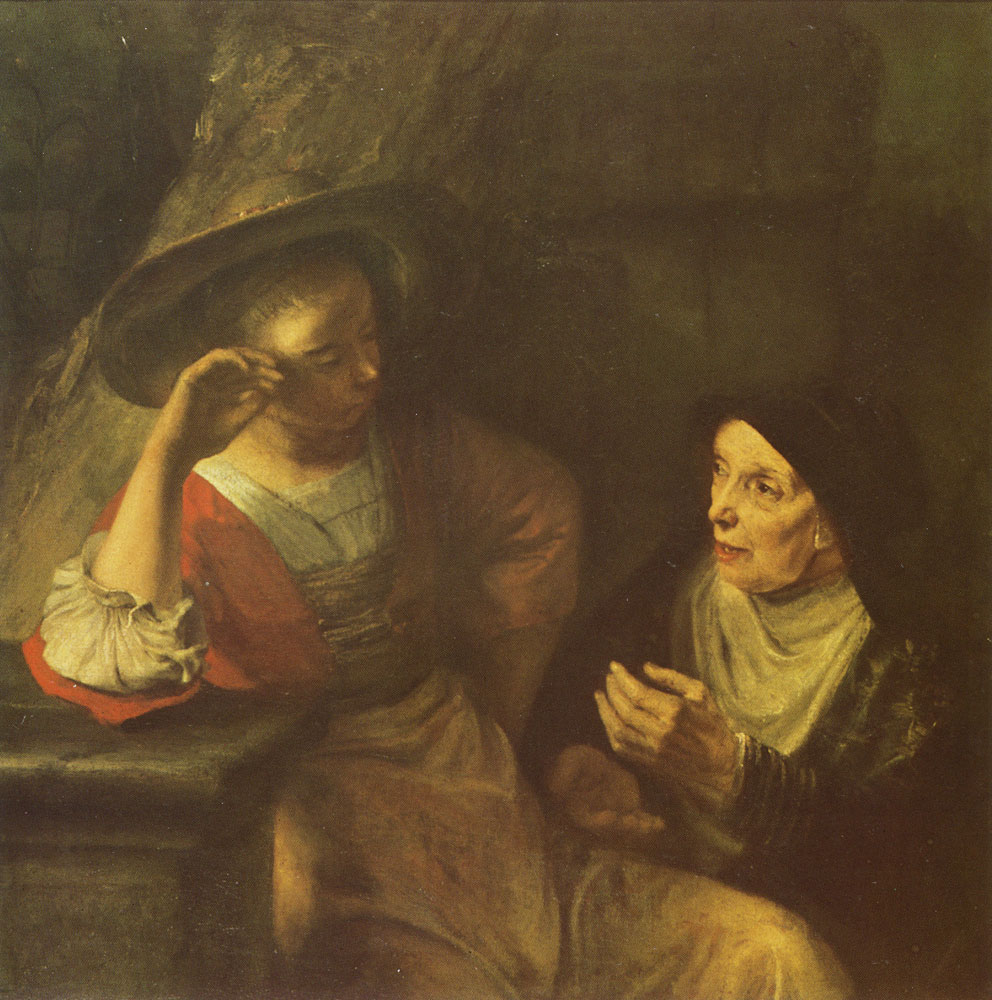
Vertumnus and Pomona
c. 1655, Unknown
A mythological scene depicting Vertumnus, god of seasons, disguised as an old woman, courting the wood nymph Pomona. A rare mythological subject for Drost.
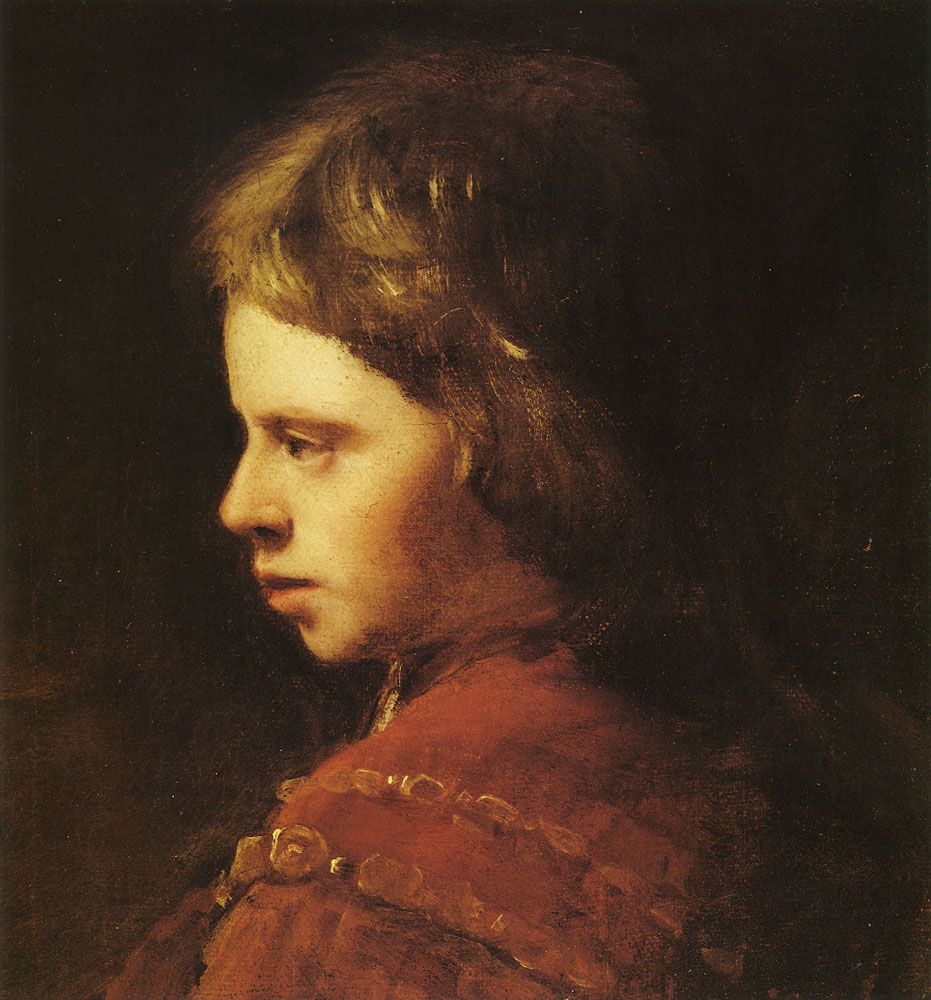
Young Boy
c. 1655, Dr. Alfred Bader Collection, Milwaukee
A small portrait of a young boy. Listed by Werner Sumowski as a Drost work but rejected by Jonathan Bikker in his 2006 monograph.
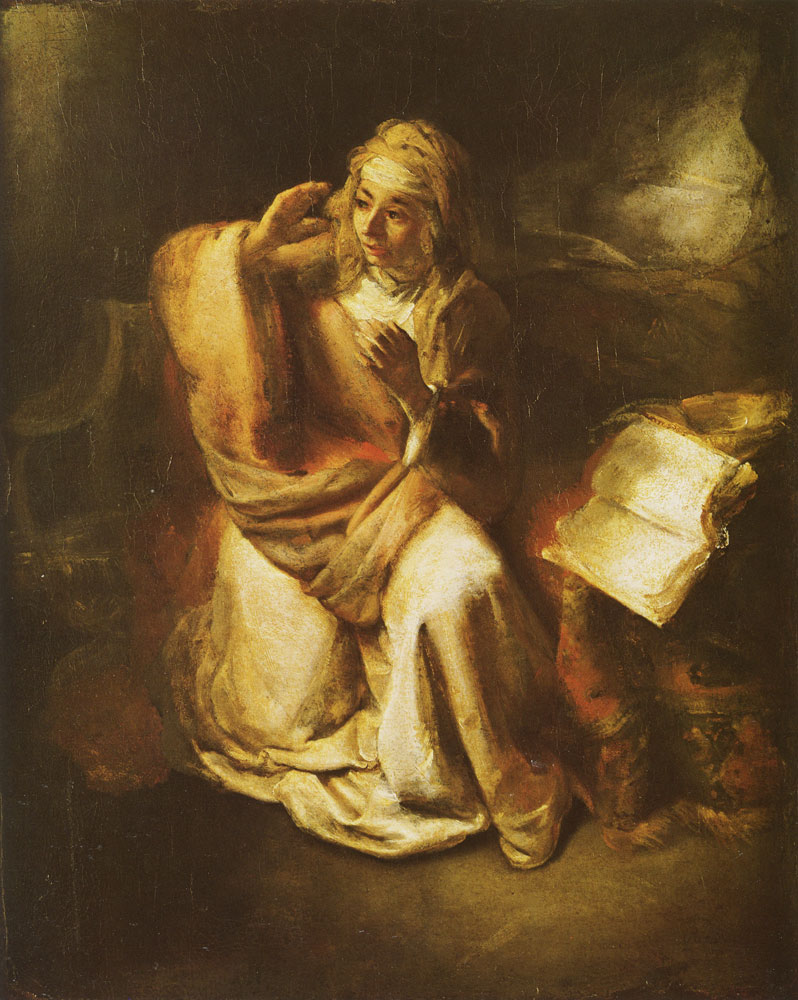
The Annunciation
c. 1650, Present location unknown
A painting of the Annunciation — the angel Gabriel appearing to the Virgin Mary — a subject Drost would have encountered in both Dutch and Italian art. The work is listed by PubHist and My Open Museum as attributed to Drost.
Young Man Sleeping Over a Book
c. 1655, Present location unknown
A genre painting of a young man sleeping over an open book, a subject related to Drost's known scholar paintings such as The Philosopher (WD-004) and Geographer (WD-019). The motif of scholarly repose was popular in the Rembrandt circle.
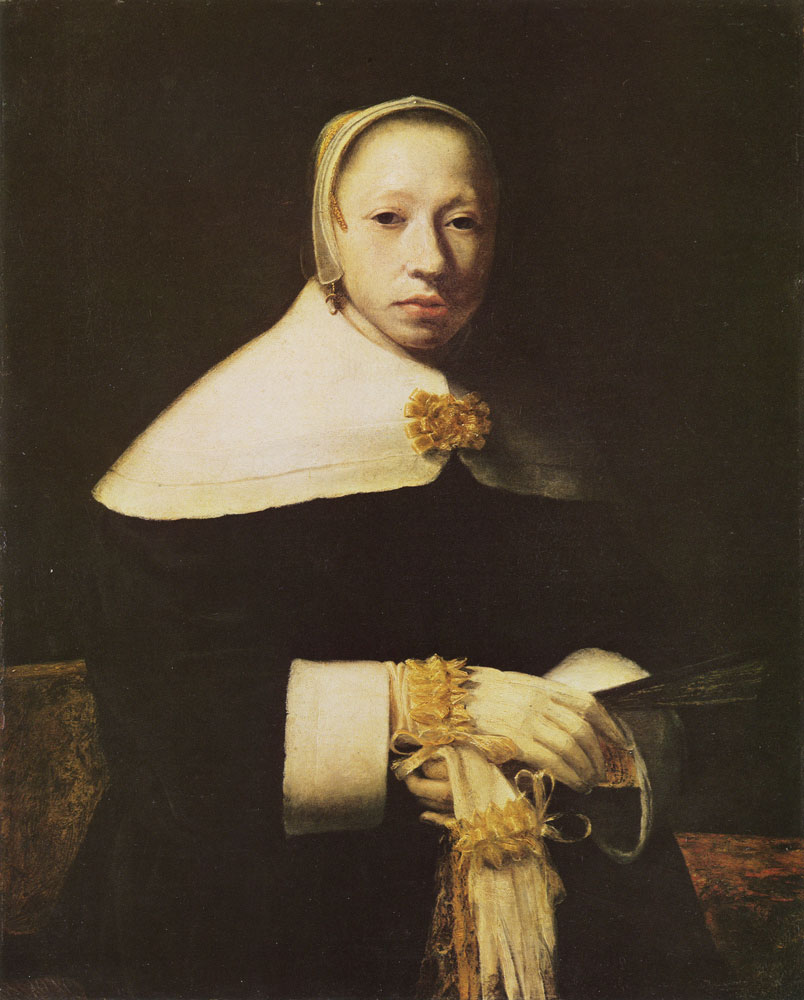
Young Woman with White Gloves
c. 1654, Present location unknown
A portrait of a young woman wearing white gloves, continuing Drost's series of elegant female portraits including Young Woman in a Brocade Gown (WD-014) and Young Woman with a Pearl Necklace (WD-015).