Genre Scenes and Studies
Though fewer in number, Drost's genre scenes reveal his sensitivity to everyday life and his ability to elevate humble subjects through refined execution.
Youth with an Earring
c. 1655–59, Hermitage Museum, St. Petersburg
A romanticized youth in 16th-century costume, wearing an earring. Painted during Drost's Italian period, this tronie was long attributed to the Sicilian painter Pietro Novelli before Sumowski identified it as Drost in 1990.
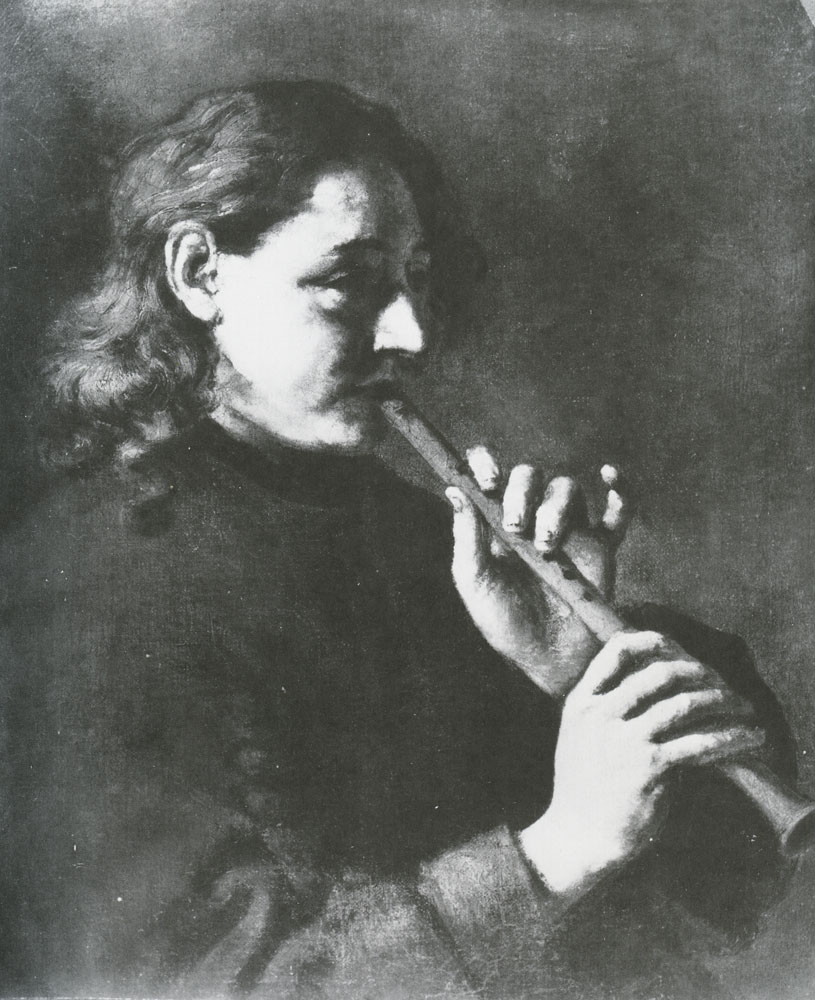
Flute Player
1655, Private Collection, Germany
A young musician playing the flute, captured in a moment of musical absorption. The painting exemplifies Drost's interest in genre subjects.
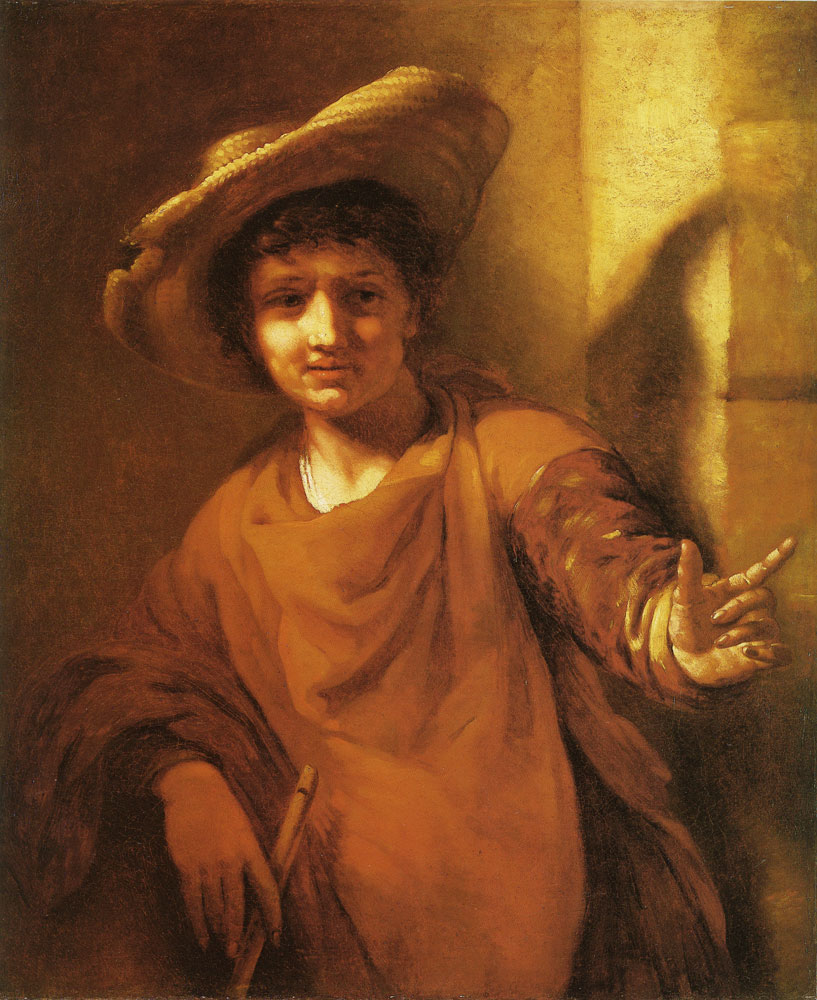
Young Man with a Flute
c. 1656, Private Collection, Scandinavia
A half-length portrait of a young man holding a flute, possibly a musician or music student. The informal composition suggests a moment of repose.
Old Woman Teaching a Child
c. 1657, Hermitage Museum, St. Petersburg
An intimate genre scene showing an elderly woman teaching a young child, rendered with warmth and psychological insight.
Boy with a Recorder
c. 1658, Galleria Palatina, Florence
A young boy holding a recorder, possibly a study of a musician or a genre piece depicting childhood. Painted during Drost's Italian period.
The Oyster Seller
c. 1659, Louvre, Paris
A genre scene depicting a young woman selling oysters, a subject with both culinary and erotic connotations in Dutch Golden Age painting.
Flora
c. 1655–59, Private Collection
A half-length depiction of Flora, the Roman goddess of flowers and spring, painted during Drost's Italian period. The youthful goddess wears a floral wreath and holds flowers against her chest, her expression contemplative.